The short answer
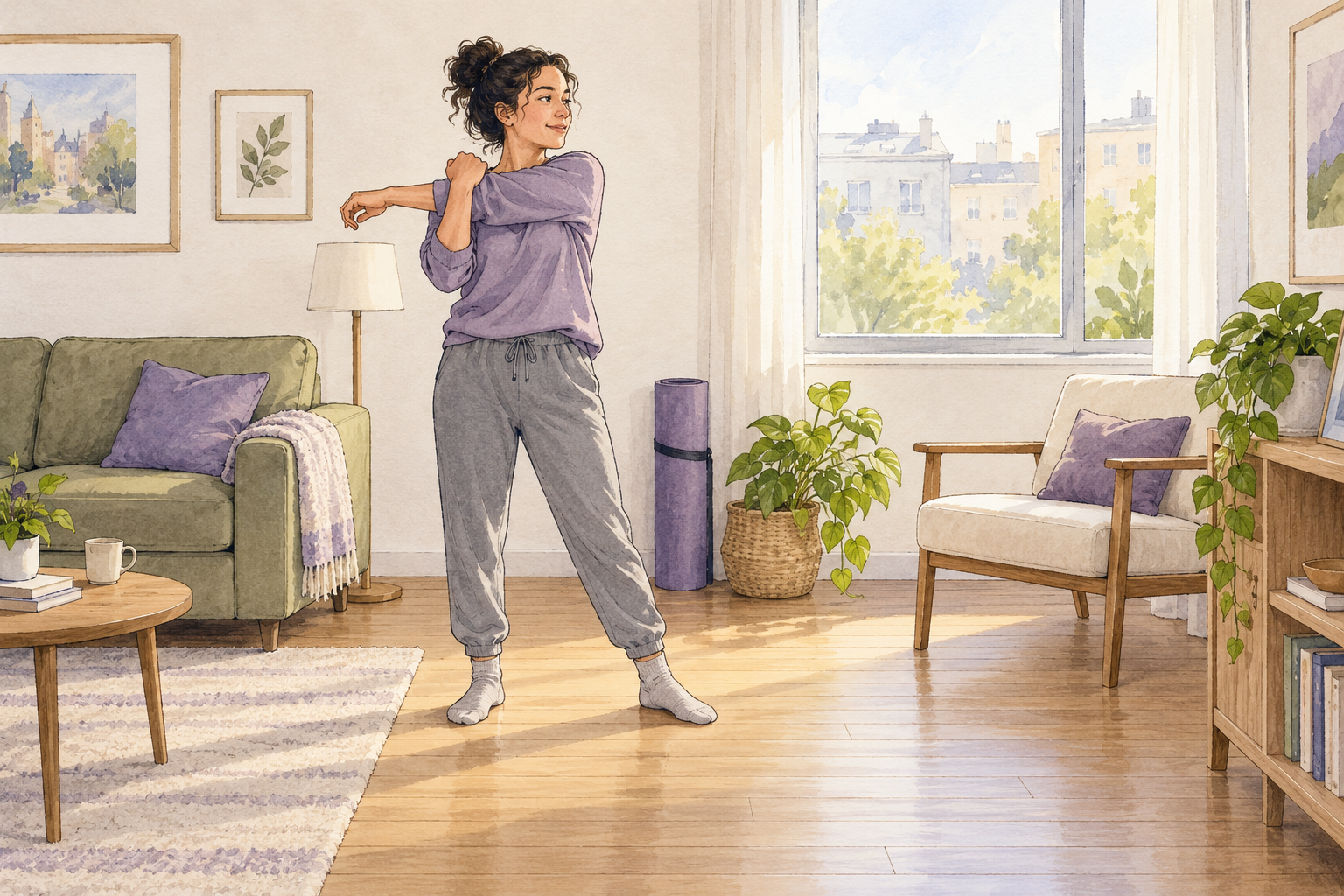
You can make room for movement in a small rental by planning the floor area, equipment, noise, and storage together. This guide helps you set up a flexible home routine without turning furniture or household objects into improvised exercise gear.
On this page
Clear a stable patch of floor
Choose a flat area with enough room for the movement you intend to do. Move cords, loose rugs, bags, and other obstacles, and check that the floor and footwear are not slippery. Keep the front door, windows, heaters, and required escape route clear. Do not use stairs, a rolling chair, a sofa, a bed, or another raised surface as an exercise bench or step.
Before a session, return fragile items to a secure place and move furniture only if you can do so safely. If the available space forces you to twist around a table or exercise near a drop or sharp edge, choose another activity or location.
Pick movement that fits the room and your ability
Small-space movement can include walking in place where the floor is clear, gentle mobility work, or strength exercises that need little room. The right mix and intensity depend on your health, mobility, experience, and goals; this page does not prescribe a workout or teach exercise technique. The CDC adult activity guidance offers general recommendations and ways to choose activities that fit your abilities.
Start at a level you can manage and increase activity gradually. If you have been inactive, have a chronic condition or injury, or need an adapted plan, ask a healthcare professional about suitable activity. CDC also recommends discussing activity type and amount with a doctor when you have a chronic health condition.
Use purpose-built equipment
If you want resistance or balance equipment, choose items made for that use, follow the maker's instructions, and inspect them for wear before use. Place them only on a stable, level surface and put them away when finished.
Do not substitute cans, books, water jugs, detergent bottles, loaded suitcases, bungee cords, or furniture for exercise weights, bands, steps, or benches. Their grip, balance, and load limits are not designed or tested for that use. Keep small equipment in a bin, closet, or under-bed container that does not obstruct ventilation, doors, or walking paths. Ask for permission before drilling, attaching wall storage, or making another permanent change.
Keep movement comfortable for neighbors
Check the lease and building quiet-hours policy before planning a routine. Low-impact movement can reduce thuds through shared floors; avoid jumping, dropping equipment, or using heavy gear that makes the floor vibrate. Put a clean, non-slip exercise mat on a level surface if it is appropriate for your floor, then roll and store it after use.
Choose a time that works for the household, keep music at a considerate level, and pause if a neighbor raises a concern. Your building may have rules about equipment or shared facilities, so confirm before using a hallway, rooftop, gym, or common room.
Make setup and storage easy to repeat
Decide where the space will be and where each item goes when you finish. A short setup that keeps belongings out of the route is easier to repeat than moving heavy furniture or leaving gear across the room. Store equipment so children, pets, and visitors cannot pull it into a walkway.
After each session, check that doors, windows, heaters, alarms, and access paths remain usable. Tell the property manager about a floor defect, loose fixture, damaged outlet, or other maintenance issue; do not repair or anchor equipment to the building without following the lease and getting approval where required.
Know when to stop and ask for guidance
Follow the MedlinePlus injury-prevention guidance: use equipment as intended, build activity gradually, and stop if you feel pain. If you feel unwell or have a health question, stop and contact an appropriate healthcare professional. Seek urgent help for an emergency.
This is a home-space planning guide, not a customized fitness program, injury assessment, or medical advice. For activity recommendations tailored to your health or abilities, consult a qualified clinician or physical-activity professional.
Sources and further reading
Keep learning
Archive years group longstanding rental topics. This Rentari guide was published on 2026-10-05.
Written and maintained by the Rentari team. Examples explain a decision; they are not customer results. Found an error or an unclear step? Send a correction with this page's address and the detail to review.
Your next step
Get started with Rentari