The short answer
Create a comfortable outdoor corner with planting, seating, color and light. Choose items around the actual balcony, building permissions, weather and everyday use.
On this page
Choose one main use and measure the space
Picture how you want to use the balcony: morning coffee, reading, growing a few herbs or sitting with another person. Measure the usable area, door swing and route back inside. Sketch the furniture in use, not only folded or pushed away. Start with the essentials for that purpose and add another item only when there is room.
Look at sun, wind, rain, privacy and nearby residents before shopping. A staged photograph is inspiration rather than a plan for your building. Check applicable balcony-use rules and ask the owner or responsible building professional about condition or load questions before adding heavy items.
Build a manageable green corner
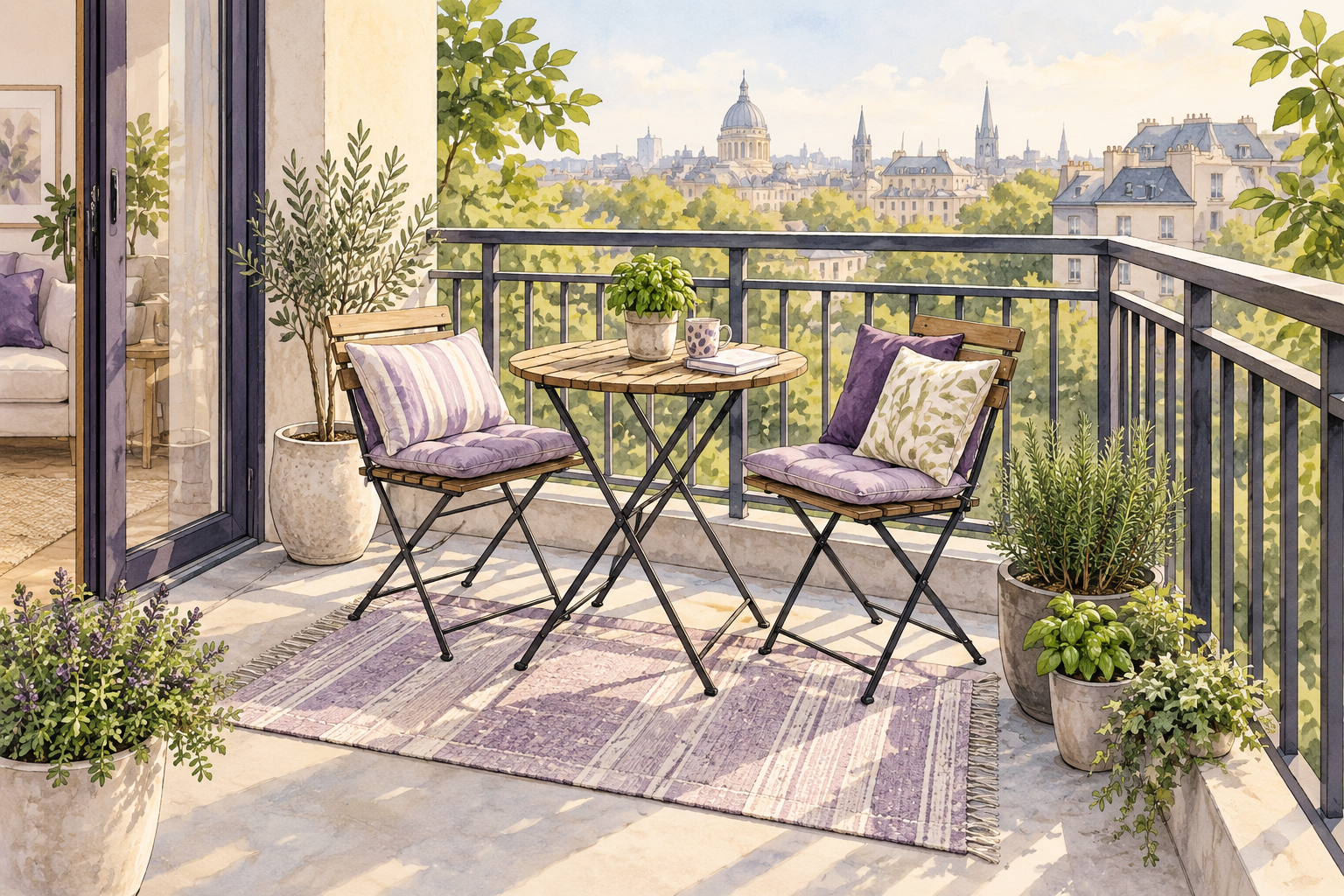
Try a few stable containers with plants suited to the available light, climate and your time for care. A modest herb container can be easier to manage than a large collection. Choose suitable container mix and drainage, using current local extension guidance for the plant rather than assuming a decorative pot meets its needs.
Keep drainage routes usable and avoid water or soil falling onto another balcony. Consider the weight of the container, wet growing medium and stored water. Choose plants appropriate for household children and animals, confirming uncertain suitability with a qualified source. Do not hang heavy pots from a railing, wall or adhesive hook without the necessary approved installation and load assessment.
Make seating work at a small scale
A compact table and suitable chairs can create a coffee corner; a small outdoor bench can support reading if the space and building permit it. Measure the chair pulled back and the table with someone seated. A folding item helps only if it is stable, used correctly and safely stored when folded.
Keep the doorway and route clear. Avoid placing objects where they encourage climbing over a guardrail, particularly where children may be present. A railing-mounted bar, swing or hanging seat needs proper permission and professional assessment rather than a do-it-yourself attachment to an unknown structure.
Use color through a few removable details
Choose a simple palette around the existing floor and furniture. Lavender cushions, a pale rug and green foliage make a calm combination; a brighter fabric or patterned cushion can provide a focal point without painting the building. Use outdoor-suitable items and keep a place to store them in unsuitable weather.
Agree on any painting or wall attachment before changing the surface. Confirm preparation, materials and restoration terms in writing. Repainting later or patching a hole does not automatically authorize the original change or guarantee a deposit outcome. Avoid relying on an adhesive product's removable label without checking the surface and conditions.
Add practical light without open flames
Consider an appropriate battery or solar lantern for gentle evening light. Where permitted, an outdoor-rated electric light needs a suitable power source, the manufacturer's instructions and any necessary qualified installation. Place it so it helps people use the space without shining into another home.
Keep cables protected from damage and away from movement routes; do not improvise outdoor wiring from indoor equipment. USFA advises against storing or using a grill on a balcony. Prefer a suitable flameless option for atmosphere and follow the building's fire rules rather than adding candles or cooking equipment.
Choose texture, storage and privacy carefully
One flat outdoor-suitable rug may define the seating area if it does not create a slip, trip, moisture or drainage problem. Compare its care instructions with the actual floor and weather. A cushion cover or washable textile can add texture without layering several rugs in a narrow route.
Use only suitable approved storage, with stable items and clear ventilation or equipment access. A privacy screen must meet the building's requirements and withstand the actual installation conditions; wind can make a tall screen or plant unsafe. Keep railings, required sightlines and emergency access functional. Temporary tiles can damage a finish or conceal drainage issues, so review them before installation rather than assuming they are harmless.
Plan upkeep and eventual removal
Give the arrangement a short trial with the household's normal movement. Check door clearance, seating, drainage and where each item goes during strong wind or a seasonal change. Remove an item that makes the space difficult to use. Report a loose railing, damaged surface or other building defect through the repair route.
Keep permissions, original condition photographs and product instructions. Clean as recommended for the actual surface and store movable items appropriately. At move-out, follow the agreed restoration process and document condition again. Good decoration should leave the balcony usable, maintainable and ready for its next resident.
Your next-step checklist
- Choose the balcony's main use and measure the actual clear space.
- Check building permissions, condition and load questions.
- Select a few suitable plants and manageable containers.
- Fit stable seating around the door and movement route.
- Add removable color, practical light and appropriate texture.
- Review drainage, weather, fire rules, privacy and safe access.
- Keep an upkeep, storage and removal plan.
Sources and further reading
Keep learning
Archive years group longstanding rental topics. This Rentari guide was published on 2026-10-03.
Written and maintained by the Rentari team. Examples explain a decision; they are not customer results. Found an error or an unclear step? Send a correction with this page's address and the detail to review.
Your next step
Get started with Rentari