

Self-employment, a recent job change, or multiple income sources can make a standard employment form a poor fit. The next step is a clear verification question, not an assumption about reliability.
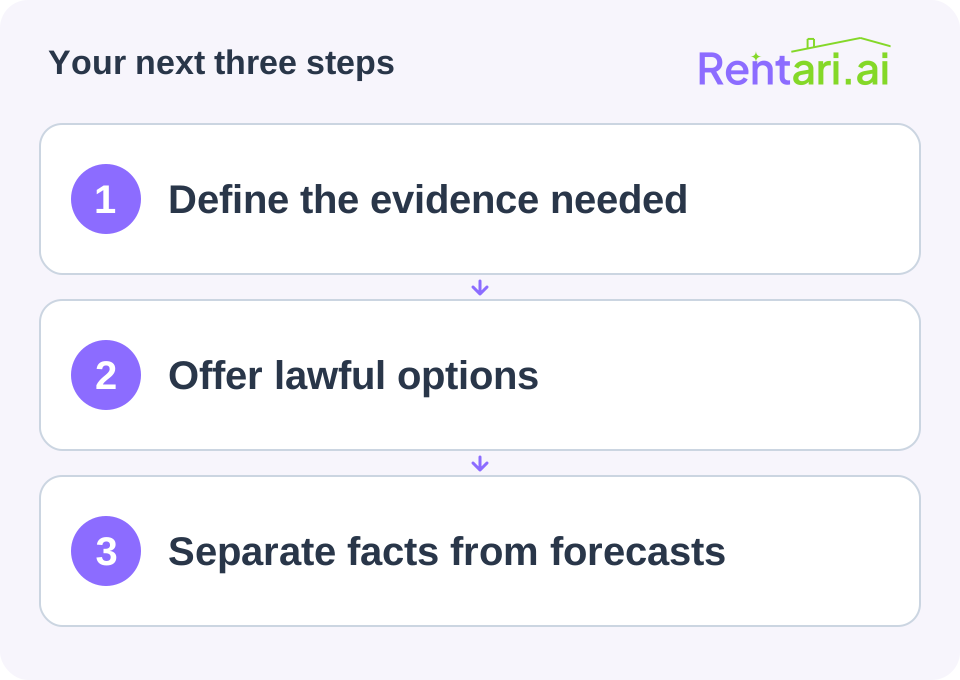
Start with reviewed criteria
Identify what your lawful criteria require and which income sources and documentation methods they permit. Check local source-of-income rules and accommodation requirements before excluding an option.
Tell applicants what is needed, how to submit it securely, and how missing information is handled. Do not request bank login credentials or unrelated transactions.
Match the record to the question
A signed offer, current pay record, benefit statement, or business documentation may answer different questions. An offer describes a prospective arrangement; it is not proof that wages have already been received.
For irregular income, record the period covered and what the figures represent. Avoid treating gross receipts as automatically equivalent to available household income. Ask a qualified reviewer when interpretation is unclear.
Keep the review consistent
Use approved verification routes, limit access, and note unresolved discrepancies. Do not keep full financial documents in a general leasing spreadsheet.
Record which facts were confirmed and the criteria version used. If your process has no fair, lawful route for common nonstandard situations, improve it before improvising for one applicant. The aim is relevant evidence, not the largest possible collection of personal records.

