The short answer
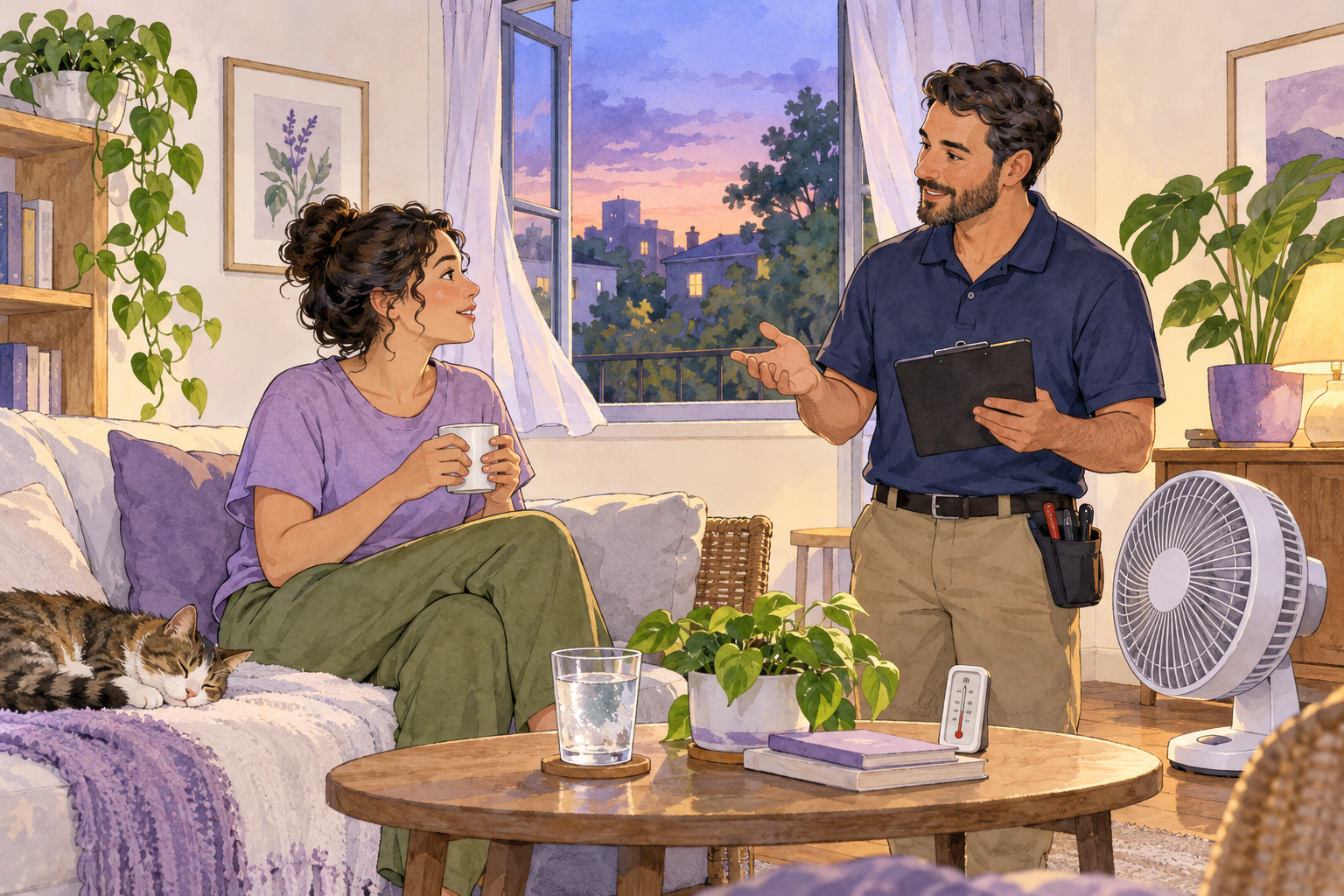
Reduce heat safely in a rental without air conditioning. Use shade and outdoor air only when conditions support them, know when to find a cooler place, and report equipment problems through the property's repair process.
On this page
Five safer ways to stay cooler
Start with the room, outdoor conditions, and the needs of everyone at home. These steps can improve comfort, but they cannot make every apartment safe during extreme heat.
Keep direct sun off the room
Close blinds or curtains on sun-facing windows during the hottest hours. Keep exits, required ventilation, and heating or cooling registers clear; ask before making permanent changes.
Open windows only when conditions help
Natural ventilation may help when outdoor air is cooler and clean. Check the weather and air-quality alert, and keep screens, locks, and safe access in mind.
Use a fan within the safety limit
CDC advises using fans only when the indoor temperature is under 90°F. A fan moves air; it does not lower the room temperature or replace a cooler location during dangerous heat.
Use simple personal cooling
Consider a cool shower or bath, lighter clothing, and regular fluids if they fit your health needs. Use the stove and oven less during the hottest part of the day.
Report equipment problems early
Tell the owner or maintenance contact when installed cooling stops working or the home remains unusually hot. Ask before installing a window unit, changing a shade, or altering building equipment.
Know when to leave the hot room
Check an indoor thermometer and local heat alerts. The CDC advises that fans be used only when indoor temperatures are below 90°F; at or above that level, do not rely on a fan to protect you from heat. Move to an air-conditioned location such as a public cooling center, library, or other nearby place if the home is dangerously hot. Call 2-1-1 or contact the local health department or emergency-management agency to ask about cooling locations.
Heat illness can become serious. Follow current public-health guidance, check on people who may be more affected by heat, and seek urgent medical help for severe or worsening symptoms. If a health professional has given you specific instructions about fluid intake or heat exposure, follow that advice.
Coordinate a repair or a change to the rental
If installed cooling is broken, report the problem with the room, approximate temperature, time of day, equipment setting, and when it began. Keep the message and follow-up together. For urgent conditions, use the property's emergency contact as well as its routine maintenance channel.
Ask before installing a window unit, attaching shade material, sealing a window, or changing ventilation. Check the lease, window security, required exits, electrical load, equipment instructions, and local rules. Use qualified help for electrical or mechanical work. A rental's cooling duties and available remedies depend on the location, agreement, and facts; confirm local requirements rather than assuming one rule applies everywhere.
Sources and further reading
Keep learning
Archive years group longstanding rental topics. This Rentari guide was published on 2026-10-05.
Written and maintained by the Rentari team. Examples explain a decision; they are not customer results. Found an error or an unclear step? Send a correction with this page's address and the detail to review.
Your next step
Follow a maintenance request