

Self-guided tours raise practical questions about safety, privacy, and insurance. Convenience alone does not establish that they suit your property.
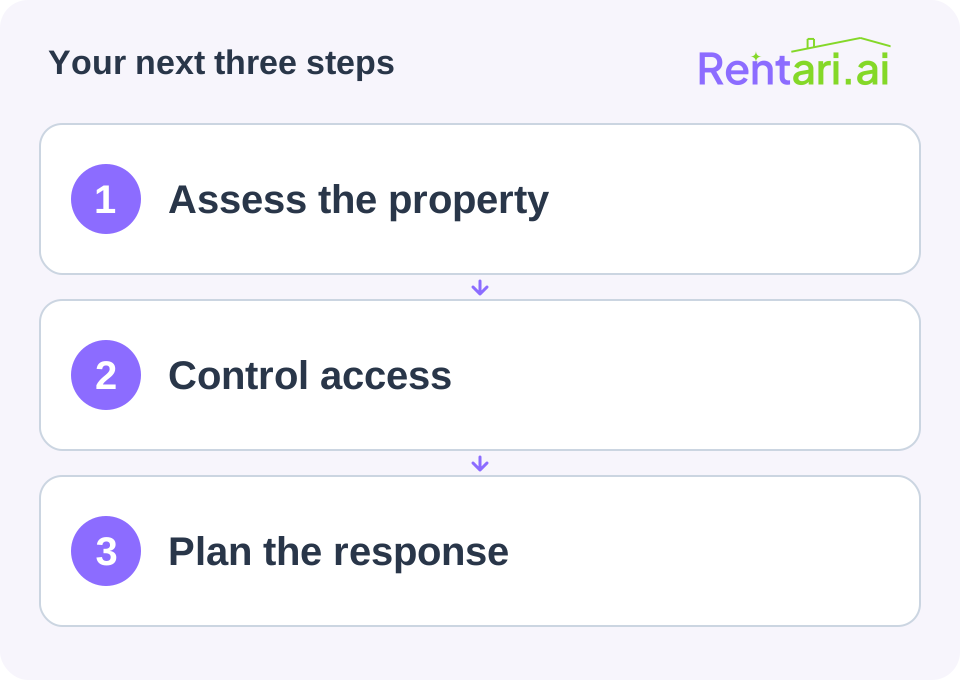
Check suitability first
Review occupancy, building rules, local entry requirements, insurer conditions, and local response coverage. A vacant prepared home differs from an occupied unit with personal belongings. A provider's default workflow may not satisfy every requirement.
Confirm safe entry and exit, lighting, required alarms, and restricted areas. An unattended viewing should not substitute for supervising unfinished work.
Define the access process
Use provider-supported access limited to the intended appointment, with a way to revoke it. Do not distribute a permanent master code. Decide who can authorize access and what happens after a canceled booking or equipment failure.
Review identity checks, fees, data handling, and activity records. Collect only necessary and lawful information. A showing-access check is not a complete tenancy decision.
Keep a person available
Provide a reliable contact for entry problems and a local fallback with authority to help. Include a post-visit security check.
If nobody can respond to a failure, arrange an accompanied viewing instead. Test the process before a real appointment. Revisit the decision when occupancy, equipment, building requirements, or insurance coverage changes.

