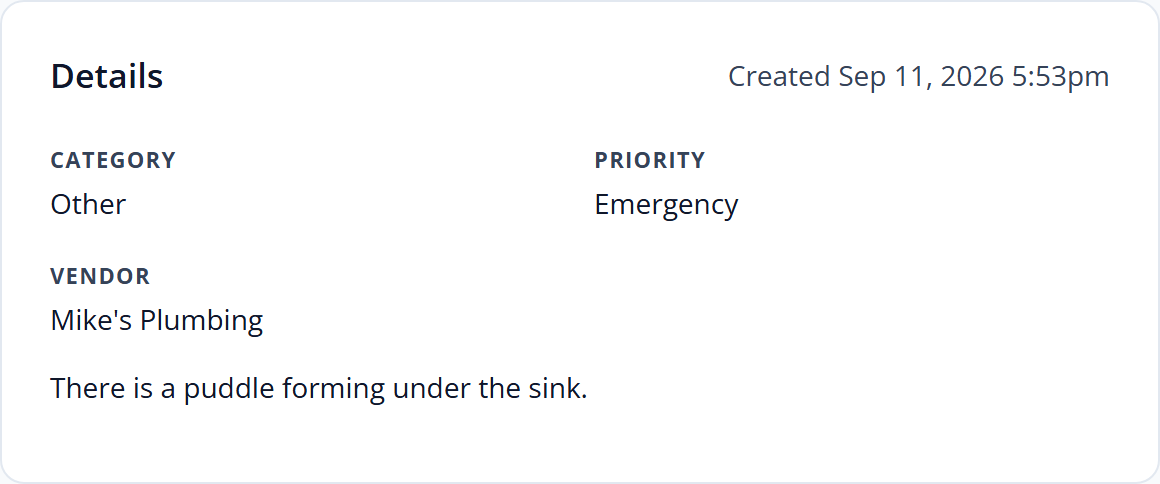
A message saying fix the sink leaves too much unspecified. A clear work order helps the contractor arrive prepared, keeps residents informed and makes the handoff between scheduling, repair and verification visible.
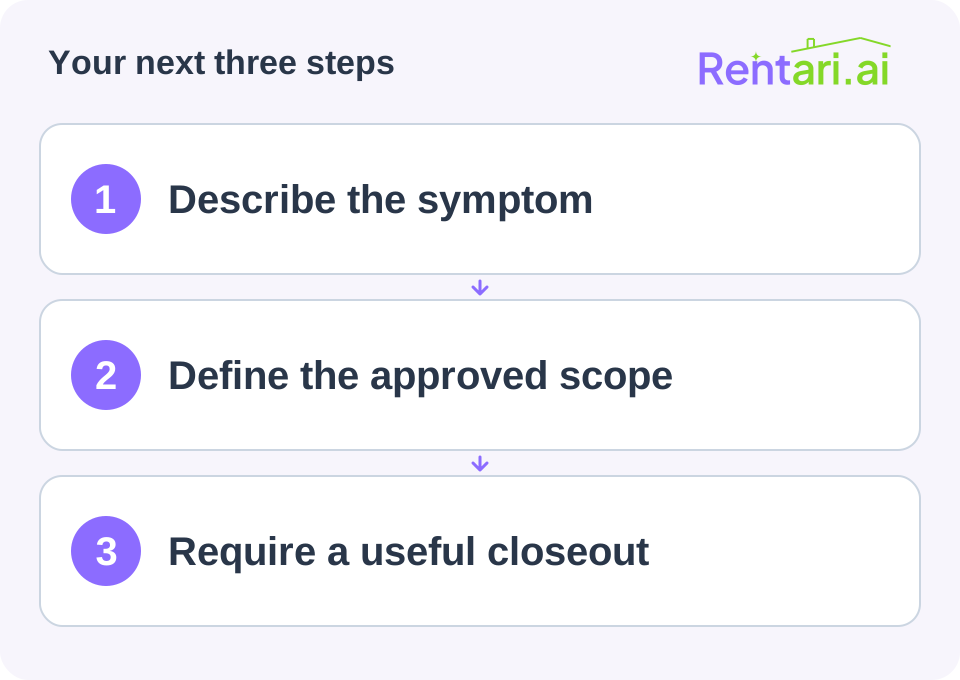
Start with the observation
Record the full property address and unit, exact room or fixture, reported symptom, when it began and whether it continues. Add safe photographs and relevant prior work. Keep the resident's description separate from a diagnosis that a qualified person has actually made.
State urgency and known hazards. Use the proper emergency response when the condition cannot wait for routine scheduling; completing a work order must not delay that response. Do not ask a resident to open equipment, enter a hazardous area or perform a test they cannot safely undertake.
Build a handoff that answers five questions
- Where is the issue? Give the exact room, fixture and property access instructions through an appropriate secure route.
- What was observed? Include symptoms, timing and evidence references, with uncertainty clearly marked.
- What is approved? State the authorized visit or work scope, any spending limit and who may approve more.
- How will entry work? Record the scheduling contact, lawful entry process and relevant resident arrangements.
- What must come back? Request findings, work performed, parts, remaining issues, photographs where appropriate and the invoice.
Keep pets requiring access coordination and areas outside the scope visible without sharing unrelated personal information. A contractor's earlier visit does not establish unrestricted access for the next one.
Work through a sink-repair example
In a hypothetical routine request, the resident reports dampness inside the kitchen cabinet after using the sink. No cause has been verified. The owner records the symptom and existing photo reference, then asks the qualified contractor to inspect the reported condition.
The approved work order authorizes a diagnostic visit up to an example limit of $250. It identifies the person who can approve repairs beyond that visit. This is an illustration of an approval boundary, not a suggested market price or a limit on emergency obligations.
At the visit, the contractor identifies a failed component and proposes additional work. The contractor sends the findings, proposed scope, price and any immediate concern to the approval contact. The owner records the response and revised scope before treating the additional work as authorized.
After the approved repair, the contractor records what was replaced, the relevant check they performed and whether surrounding materials need further assessment. If the source is repaired but cabinet damage remains under review, the work order keeps that follow-up open with a named owner. One completed repair should not hide a separate unresolved condition.
Close with evidence, then tell the resident
Keep these events separate: appointment booked, contractor attended, repair completed and result verified. An invoice establishes a billing event; it does not by itself establish that the reported issue is resolved.
Compare the closeout with the approved scope. Link the invoice, warranty information and any return-visit requirement. Use the appropriate verification process, then send a short resident update stating what was completed and what happens next.
For a job waiting on a part, record who will obtain the next status and when the resident will hear back. Another team member should be able to continue the job from the record without asking the resident to repeat the entire history.