The short answer
Describe the property's actual rental use, compare written coverage on the same basis, and check limits, exclusions, deductibles, and claim conditions with a licensed insurance professional. A policy label or old national price estimate cannot establish what a specific loss would be covered for.
On this page
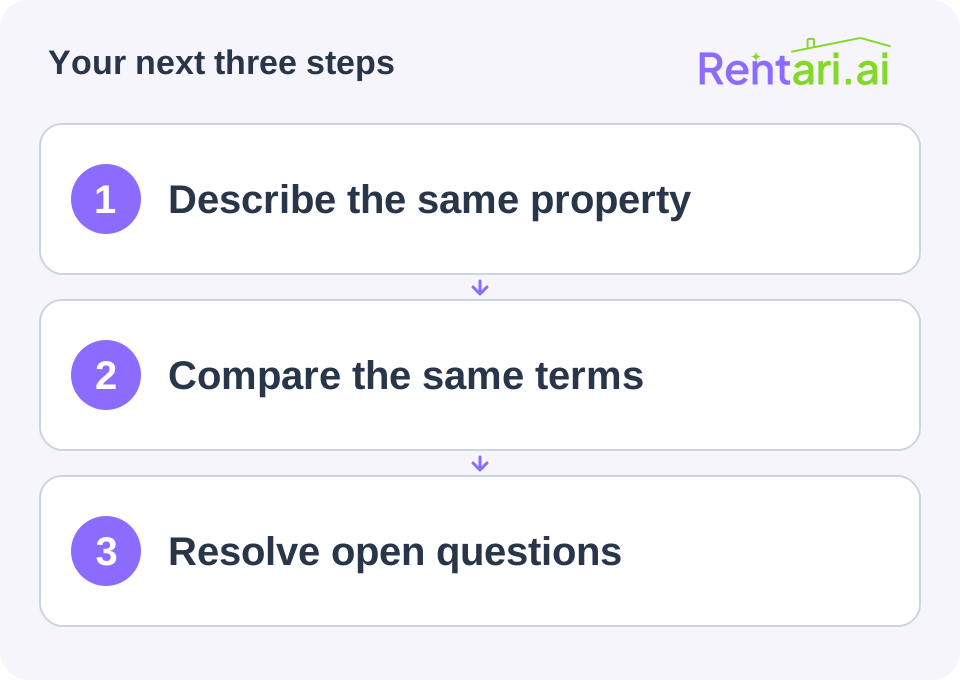
Describe the property and its actual use
Tell the insurer who owns and occupies the property, how many units are rented, whether the home is furnished, and whether stays are long-term, short-term, shared, or temporarily vacant. Mention amenities, renovations, and business activity that may affect underwriting. An existing homeowners policy may need to change when the use changes, but the policy and endorsements decide the actual terms. Ask for written confirmation rather than assuming that a product name covers your arrangement.
Keep the address, ownership, occupancy, rental schedule, and effective dates consistent when requesting quotes. Correct material facts with the insurer; do not omit a use or condition to obtain a lower price.
List the coverage questions for this property
Ask how the policy treats the building and other structures, owner-owned furnishings or equipment, liability, and any loss-of-rental-income coverage. For each item, record the limit, covered causes of loss, valuation method, and important exclusions or conditions. A marketing summary is not a substitute for the declarations, policy wording, and endorsements.
Landlord coverage generally does not insure a renter's own belongings. A renter's policy serves a different purpose; explain the distinction without promising that either policy pays for a particular event.
Check exclusions, deductibles, and claim conditions
Review water damage, flood, earthquake, vacancy, wear, intentional damage, and other risks that matter at this address. Ask whether a risk is excluded, subject to a limit, available by endorsement, or covered under a separate policy. Deductibles may differ by cause and some may be a percentage of an insured value. Do not infer coverage from a broad phrase such as all-risk or comprehensive.
Ask what notice, mitigation, inspection, documentation, and cooperation the insurer requires after a possible loss. Coverage and claim outcomes depend on the actual policy, facts, applicable rules, and insurer review.
Compare limits and valuation on equal terms
Review how the building amount was estimated and whether it refers to rebuilding rather than the property's sale price. Ask whether covered property is valued at replacement cost or actual cash value, what deductible applies, and whether any sublimit or special condition matters. Keep the assumptions and effective date with the estimate; a market value or an old national average does not determine the coverage needed for this property.
When comparing quotes, line up the declared use, insured property, limits, valuation choices, deductibles, endorsements, exclusions, payment terms, and start date. A lower premium may reflect a different risk, limit, or deductible.
Compare the policy forms and gaps in writing
Request the actual form and endorsements. The North Carolina dwelling-policy guide explains common forms; confirm the issued contract with your insurer.
| Option | Written answer to request |
|---|---|
| DP-1 basic dwelling form | Which named causes are included, and which need extended coverage or an endorsement? Confirm the settlement basis rather than assuming every DP-1 must use depreciation. |
| DP-2 broad dwelling form | Which additional named causes, exclusions, vacancy conditions and valuation terms apply? Ask separately whether liability and rental-income protection are included. |
| DP-3 special dwelling form | Which exclusions apply to broader building coverage? Owner-owned contents can still use named causes; the form label does not guarantee a full replacement-cost payment. |
| Condo or association property | Compare the governing documents and master policy with the unit policy: interior finishes, owner improvements, rental use, deductible responsibility and any loss-assessment coverage. Do not assume association dues insure everything inside the rental. |
| Liability, umbrella and ownership | Identify the insured people and entities, rental addresses, underlying limits, defense terms and exclusions. Use the umbrella review guide; an LLC and an insurance policy resolve different questions. |
| Separate hazard and income coverage | Review flood, wind, earthquake, backup or other relevant hazards separately. Ask what event triggers rental-income coverage, its period and limit; neither a property-loss policy nor a flood policy is a guarantee against unpaid rent. |
The Washington regulator's condo guide describes master-policy and unit-policy coordination. Apply the property's own documents and jurisdiction. The NFIP's business-flood explainer distinguishes building and contents and excludes business interruption/loss of use from that flood coverage; do not assume flood insurance restores lost rental cash flow.
Check legal, lender, association and housing-program requirements separately from the insurer's coverage offer. A nationwide assertion that insurance is always mandatory or never required is insufficient.
Prepare an insurer-directed claim record
Return only when authorities say it is safe. Contact the insurer through its official claim channel and document damage safely. The NAIC claims guide explains reporting and evidence preparation.
- Record policy and claim numbers, contacts and reporting deadlines.
- Ask about inspection, evidence and safe temporary mitigation. Keep dated photographs, an inventory and emergency-work receipts.
- Discuss permanent repairs and disposal with the insurer; preserve evidence subject to safety instructions.
- Separate building, owner-property, rental-income and resident claims. Retain lease/rent records and restoration dates for an income review.
- Ask about deductibles, valuation, limits and approval. Keep the written decision and unresolved questions.
A renter's possible additional-living-expense claim and the owner's rental-income claim are different. Temporary living coverage has its own conditions, time and dollar limits; it does not establish the owner's relocation duties. Use the renter's policy guide and check local obligations. Rentari can organize rental records; it does not submit, adjust or decide an insurance claim.
Keep the intended file version under the right rental using document instructions. A stored file is separate from insurer reporting or an accepted claim.
See Rentari's insurance-record workflow for resident proof, document review and renewal reminders. Saved dates and extracted details need human review and do not establish live insurer coverage.
Respond to cancellation or nonrenewal before a gap
Read the actual notice, reason and effective date. Distinguish cancellation during a policy term from nonrenewal at its end. Ask the insurer or licensed professional about correction, replacement and any review process; get the applicable state notice rules and complaint assistance from the insurance department. Do not use a universal one-to-three-month notice assumption.
Compare replacement coverage on the same property facts and confirm binding, payment and effective dates. A quote or application is not a policy in force. If ordinary-market coverage is unavailable, ask the licensed professional and regulator about the state's actual residual-market options. NAIC's FAIR-plan overview explains why eligibility and protection vary; check separate liability and income gaps. A residual plan is not automatically a complete landlord package.
For a surplus-lines option, verify the broker's licensing, insurer eligibility, exclusions, fees and the applicable lack of guaranty-fund protection. It is not an unregulated or interchangeable substitute. Where mortgage requirements apply, provide the servicer with the actual replacement-policy evidence and resolve any notice promptly. The CFPB force-placed-insurance guidance warns that lender-purchased insurance may protect only the lender and can cost more; it is not a replacement for checking your own rental coverage.
Get current quotes and verify the source
Request current written quotes from appropriately licensed insurers or agents using the same property facts and requested limits. Compare the complete terms and total payment schedule, not a promotional starting price. Verify licensing and consumer complaint or assistance resources through the insurance department for the property's jurisdiction.
Flood coverage and other separate protections can depend on location, program availability, and policy terms. FEMA's Flood Map Service Center can help locate official flood-hazard information, but a map is not a complete assessment of every hazard or a coverage decision. Ask the insurer about the specific address and policy.
Keep a renewal and claim record
Save the declarations, full policy, endorsements, quote assumptions, premium and deductible schedule, insurer contacts, renewal date, and written answers. Keep a dated inventory, photographs, receipts when available, and records of property changes in a secure place. After a possible loss, follow the policy's reporting and mitigation requirements and preserve communications, estimates, and invoices.
Rentari provides rental software and written guides. It does not sell or compare insurance, recommend a carrier, determine coverage, or handle claims. Use a licensed professional for policy questions and a qualified adviser for legal or tax questions.
Sources and further reading
- NAIC: state insurance departments
- NAIC: comparing homeowners insurance coverage and value
- NAIC: common policy exclusions and separate coverage
- NAIC: property insurance consumer guidance
- FEMA Flood Map Service Center
- North Carolina insurance regulator: dwelling policy forms
- Washington insurance regulator: condo and master policies
- NFIP: business building and contents flood coverage
- NAIC: post-disaster claim records
- NAIC: additional living expenses and limits
- NAIC: FAIR-plan and residual-market questions
- NAIC: surplus-lines regulation and protection
- CFPB: force-placed insurance and servicer records
Keep learning
Common questions
Does landlord insurance cover the renter's personal belongings?
A landlord policy generally covers the owner's interests under its terms, not a renter's own possessions. The renter should review separate renters coverage for personal property and liability. Check the actual policies rather than assuming one protects the other person.
Does loss-of-rent coverage pay for every missed rent payment?
Do not treat it as a general guarantee against nonpayment or ordinary vacancy. The trigger, covered period, limit, and exclusions depend on the issued policy. Ask the insurer to explain the exact terms in writing.
Does a landlord policy include flood or earthquake coverage?
Do not assume either risk is included. Review exclusions and endorsements for the address, ask the insurer about separate coverage and deductibles, and use official hazard information as one input rather than a coverage decision.
How much does landlord insurance cost?
There is no single reliable price for every property. Cost depends on the declared use, location, building, limits, deductibles, and policy options. Get current written quotes with the same facts and terms so the comparison is useful.
Can I keep a homeowners policy after I rent out the property?
Tell the insurer before the use changes and ask what policy or endorsement applies. The policy wording and actual facts determine coverage; do not rely on a general article or the name on a quote.
Does Rentari recommend insurance companies or compare quotes?
No. Rentari offers rental software and written guides, not insurance brokerage or claim services. Confirm carrier licensing and policy terms with the insurer and the relevant state insurance department.
Does a DP-3 label guarantee full replacement cost and every peril?
No. Review the actual building and contents terms, exclusions, endorsements, deductible and settlement conditions. Broader building coverage can coexist with named-peril contents coverage; the form label alone does not establish a payout.
What should I do after receiving an insurance nonrenewal notice?
Read the reason and effective date, contact the insurer or licensed professional, compare replacement terms and verify the actual policy start. Ask the state insurance department about applicable review and residual-market options. A quote does not prove continuous coverage.
Can Rentari verify coverage or handle the insurer claim for me?
Rentari provides software and written guides. Resident proof is recorded for human review and reminders can use saved dates; neither establishes live insurer status or a claim outcome. Contact the insurer or licensed professional for policy and claim questions.
What should I keep in an insurance claim record?
When safe, retain damage photos, an inventory, emergency-work receipts, policy and claim numbers, contacts and written next steps. Ask the insurer about deadlines, inspection, mitigation and permanent repairs. Rentari does not submit, adjust or decide the claim.
Archive years group longstanding rental topics. This Rentari guide was published on 2026-10-06.
Written and maintained by the Rentari team. Examples explain a decision; they are not customer results. Found an error or an unclear step? Send a correction with this page's address and the detail to review.
Your next step
Find the current product workflow