
The short answer
Agree on the home, costs, everyday routines and belongings before moving. Keep your household plan separate from the rental agreement, and revisit it after living in the space.
On this page
Choose the arrangement together
Discuss what each person wants from sharing a home. Compare moving into an existing rental with finding another home together. Talk about the location, space, privacy and timing that matter to each of you before committing.
If one person already rents, confirm the actual process for adding an occupant or tenant. If both are applying, ask who will sign and which documents each applicant must provide. Obtain the necessary written approval and revised agreement before treating an informal invitation as permission to move in. Keep each applicant's sensitive records in the appropriate secure channel.
Write down costs and payment responsibilities
Discuss contributions to rent, utilities, food and other shared expenses. Agree on a practical division rather than assuming that equal amounts fit both budgets.
List one-time moving costs separately from recurring charges, identify each due date and who makes the payment, and keep receipts. Record how you will handle a bill adjustment, a missed contribution or a refunded deposit. Use the CFPB's public bill and cash-flow tools if a dated budget would help. Neither person needs to share account passwords for a household worksheet.
Your arrangement with each other does not by itself change what the lease requires. Read the signed agreement's responsibility and release terms, ask about unclear language and keep a copy accessible to each signer. Do not assume a private half-rent arrangement limits what an owner may lawfully seek under the agreement.
Agree on routines and individual space
Discuss chores, sleep, visitors, shared meals and work time. Make room for separate interests and time alone. Describe a specific change you would like and arrange a regular conversation about how the setup is working.
Turn a broad intention into a usable plan: which task, when it happens and how you will review it. Include food storage, laundry, shared purchases, noise during calls and where belongings go. Follow the building's visitor and noise rules. Identify a quiet work or rest area where possible without blocking a door, exit or necessary route.
Combine belongings without rushing a decision
Sort duplicate items and keep space for belongings that matter to each person. Measure the room before deciding which furniture fits. Ask the owner of an item before selling, donating or discarding it.
Use this decision route for each item:
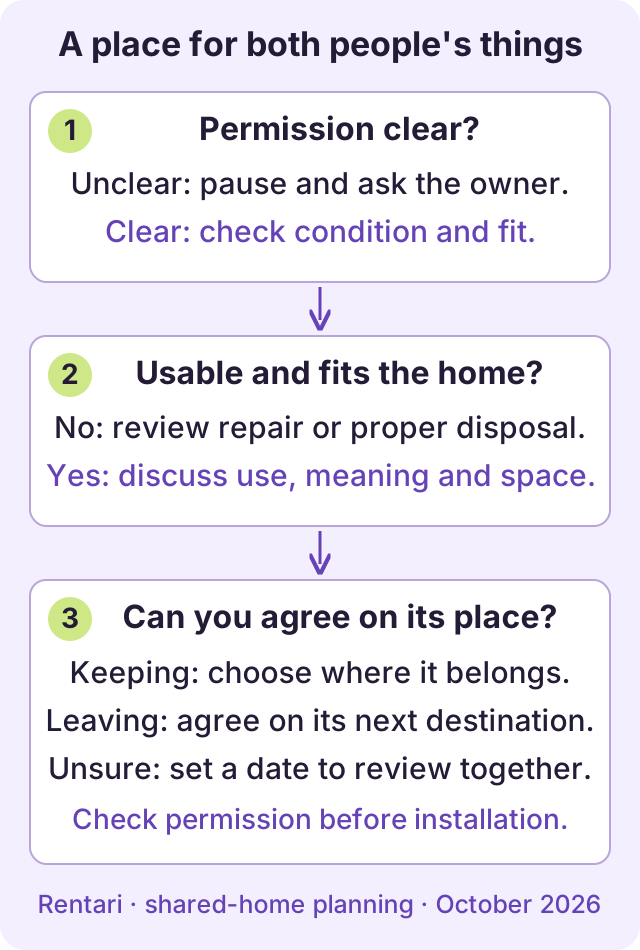
- Whose item is it? If ownership or permission is uncertain, pause and resolve that first.
- Is it usable and appropriate for the new home? Check condition, recalled products where relevant, dimensions and any installation permission. Arrange an appropriate repair or disposal route for an unsafe item.
- Does it serve a real use or hold personal meaning? Identify where it belongs. Compare duplicates by condition and actual use, without disposing of someone else's keepsake.
- Can you both agree now? If not, make a small review pile with a date to revisit. Price storage and access before taking on an ongoing bill.
- Is it leaving? Confirm the recipient accepts its type and condition or use the correct local recycling or disposal route. Erase personal data from devices before transfer.
Choosing to keep an item does not authorize attaching it to a wall or changing the rental. Confirm the applicable permission and installation requirements separately.
Coordinate the physical move
Confirm the key handoff, permitted moving times, elevator or loading arrangements, utilities and who will be present. Keep essential documents and medication accessible. Share access details only with people who need them, and use the building's approved method for any temporary access.
Inspect and photograph the unit together where practical. Send the condition record through the agreed channel, save a copy and identify unresolved repairs. If one person is joining an occupied rental, distinguish the existing condition and deposit arrangement from any newly agreed obligation. Ask the owner how the records and responsibilities will be handled.
Keep a shared planning worksheet
Download shared home plan (CSV)
The original worksheet covers approvals, signers, bills, deposits, household routines, personal space, belongings, moving arrangements and a review date. Record the agreement and the question still needing an answer. It is a conversation record, not a lease amendment, financial product or relationship assessment.
After the first few weeks, review practical problems and adjust the household plan by agreement. For a proposed tenancy change, departure or replacement occupant, check the actual lease and current local rules, and get any necessary written approval or release. A change in the relationship does not automatically end contractual responsibilities.
Sources and further reading
Keep learning
Archive years group longstanding rental topics. This Rentari guide was published on 2026-10-03.
Written and maintained by the Rentari team. Examples explain a decision; they are not customer results. Found an error or an unclear step? Send a correction with this page's address and the detail to review.
Your next step
Get started with Rentari