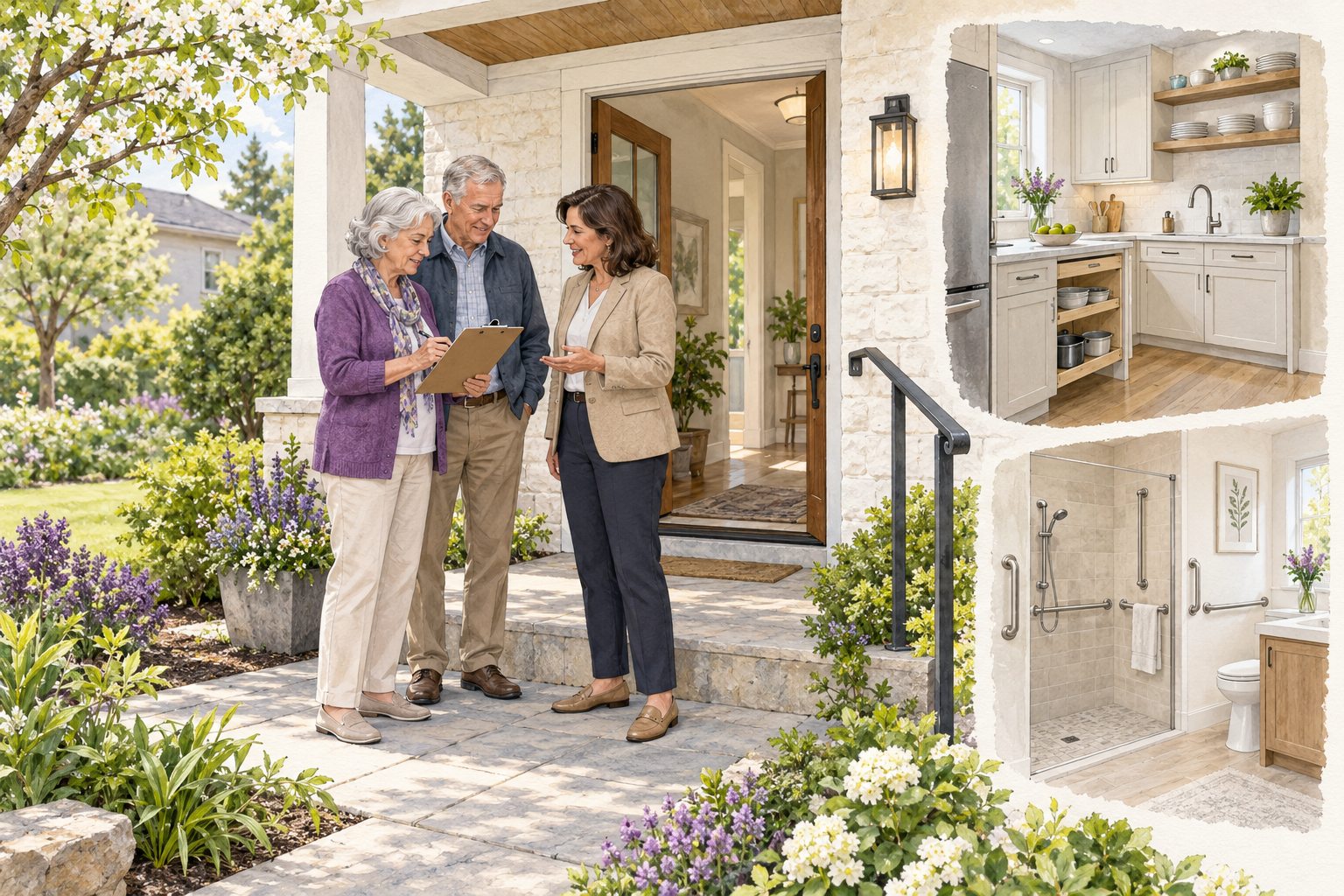
The short answer
Compare the home, services, access and full cost around the resident's own preferences. Bring a practical tour checklist and verify assistance and age-restricted housing requirements separately.
On this page
Compare the actual housing and services
Start with the resident's preferences, budget, location and requested support. Older adults have different routines and housing needs; age alone does not establish incapacity, quiet behavior, reliable payment or a preference for neighbors of the same age.
- Ordinary rental homes and apartments: compare the unit, maintenance arrangements and neighborhood around the person's needs. An ordinary rental is not automatically an age-restricted community.
- Independent-living or retirement communities: ask which meals, housekeeping, transportation, activities and other services are actually included. The label alone does not establish a minimum age, available care or a service guarantee.
- Co-housing and shared communities: review private space, shared facilities, participation expectations, rental terms and charges. Buying a home or membership is different from renting one.
- Assisted living and other care settings: verify the services, staffing, applicable licensing, separate agreement and actual cost with the responsible provider. Rental-management software does not supply personal or medical care.
A resident may arrange support while remaining in an ordinary rental. Keep that choice with the resident and the appropriate professionals rather than assigning a housing category from appearance or a landlord's assumptions.
Check age restrictions and fair housing separately
HUD lists race, color, national origin, religion, sex, familial status and disability among the Fair Housing Act's protected grounds. Federal familial status concerns children under 18 living with a parent or authorized custodian, pregnancy and securing custody; it is not a general synonym for older age. State and local requirements may add protections, including age or source of income, so review the property's actual rules.
Housing for older persons can qualify for a specific exemption from federal familial-status provisions. The 55-or-older route requires at least one person aged 55 or older in at least 80% of occupied units, published and followed operating policies, and compliant occupancy verification. A 55+ advertisement alone is insufficient. Other qualifying routes have different requirements, including the route for housing intended for and solely occupied by people 62 or older. Have the property's eligibility and rules reviewed before restricting occupancy.
The exemption does not erase unrelated fair housing or disability duties. Apply the appropriate consistent application process, consider lawful resource-documentation options and route accommodations for individual review. Ordinary pets and disability-related animal requests need distinct processes.
Take a tour around the person's daily routine
Download rental tour checklist (TXT)
Confirm the actual unit, tour date and any requested access arrangements. Compare the route to shopping, transportation, appointments and chosen activities, including practical travel time and cost. Ask about noise, deliveries, parking and visitors without assuming which setting the resident will prefer.
Visit the entrance, unit and relevant shared areas where safely possible. A virtual tour may help with layout but may not establish lighting, reach, thresholds, equipment operation or the resident's practical use of the space. Record an unverified feature as unverified rather than promising it will work.
Ask for written rent, deposit, permitted charges, utilities, optional-service prices and renewal terms. Compare the total recurring and upfront costs. Review relevant community or association rules, who is responsible for any charge, and how those rules relate to the proposed tenancy.
Review access and features room by room
Use the person's stated needs and appropriate professional assessment to identify suitable changes. NIA's home-safety guidance emphasizes clear routes, secure floor coverings, lighting and properly placed supports. A checklist is a starting point, not a compliance inspection or a promise that falls will be prevented.
- Entrance and routes: inspect surfaces, thresholds, doors, lighting and handrails. Check space and door operation for the person's actual use. Ramps and lifts need a qualified design, permissions and the applicable requirements.
- Kitchen: review reachable storage, usable handles and controls, task lighting and appliance placement. Consider appropriate pull-outs or other storage changes. A counter-height appliance must still fit its installation instructions, clearance and the user's needs.
- Bathroom: assess surfaces that may become wet, shower controls, entry and usable space. Grab bars require appropriate placement and secure mounting; a towel rail is not a substitute. Review any proposed surface treatment or handheld shower for compatibility.
- Bedroom and storage: consider a clear route, reachable switches, bedside light and accessible storage. Check that a proposed closet mechanism is suitable and securely installed rather than assuming one standard height works for everyone.
- Laundry: test access to the drum and controls, labels and the route with a basket. Front-loading equipment or a pedestal may help some people and hinder others. Follow installation requirements and assess the actual reach.
Check the property's alarms, emergency instructions and maintenance reporting route. Keep required repairs separate from optional upgrades. Discuss appropriate assessment and communication needs without asking the resident to perform hazardous work.
Handle requests through the applicable process
A policy change, a physical modification and a repair are different requests. Clarify the housing need, review applicable duties and costs, obtain only necessary information, and preserve a usable record of the response and work. Do not automatically charge for every disability-related change or deny a request because the building was advertised as senior housing.
ADA Title III coverage and Fair Housing Act coverage require separate analysis. DOJ explains that strictly residential facilities are different from places of public accommodation within them, such as a rental office. Funding, public-entity programs, building requirements and local law may add duties. An age-in-place checklist or a feature labeled ADA-compliant does not establish that the whole property complies with every applicable requirement.
Check how an elevator, lift or controlled entrance actually operates, including maintenance, outages and emergency access. Proposed cameras or gates need a review of privacy, permitted placement, access and exit requirements. A security device does not establish personal-care monitoring or a safety guarantee.
Arrange qualified installation, permissions, lawful access and verification of completion. Ask whether the agreed result is usable. Software tracks tasks and records; owners and their chosen professionals arrange and perform the actual work.
Keep communication, contacts and payments resident-led
Offer a usable communication channel and clear maintenance contacts, including the actual emergency process. Explain who handles a burned-out bulb, a plumbing issue or another task under the agreement and applicable duties. Do not promise that a community office or landlord provides clinical monitoring.
Ask whether the resident wants to name an emergency contact and which communications are authorized. A contact is not automatically a representative who may sign documents or receive private tenancy details. Keep the necessary contact record secure, and avoid routinely collecting medical histories, doctors or hospital preferences without a defined purpose. Respond to an immediate emergency through appropriate emergency services.
If payment timing creates a problem, discuss the specific request and any lawful, reviewed adjustment or accommodation process. Record agreed due dates, installments, reminders, fees and effects in writing. Do not assume a payment was missed because of age, presume a memory problem or contact relatives about a private issue without appropriate authority. A conversation is separate from required notices and legal proceedings.
Verify assistance and care coverage before budgeting
HUD's Section 202 program supports affordable housing for eligible older households. Its tenant information says at least one applying adult must be 62 or older and household income must be below 50% of the local area median income. Review the specific property's current criteria, documentation, availability and waiting process. Contact its owner or manager to apply; HUD does not lease the units directly. This program is different from declaring any private home a 55+ community.
Separate housing charges from health and care costs. Medicare explains that it and most health insurance, including Medigap, do not pay for most non-medical long-term care. Medicaid eligibility and covered services depend on state requirements. Do not count Medicare or a supplement as a general rent subsidy; verify any proposed benefit with the responsible program before relying on it.
ACL's Eldercare Locator connects older adults and families with community services. It can help identify local aging-service contacts for practical support questions. Eligibility, availability, charges and the actual service must still be checked. Share only the information needed for the resident's authorized request.
Confirm the arrangement before moving
- Compare the actual unit, location and resident's preferences.
- Verify services, licensing where relevant, and total costs in writing.
- Review applicable age restrictions, assistance criteria and local rules.
- Record observed access features and unresolved tour questions.
- Agree on request review, maintenance contacts and qualified work.
- Confirm resident-authorized contacts and communication arrangements.
- Verify any benefit directly and obtain the appropriate agreement.
- Plan keys, access, utilities and a follow-up on promised work.
Keep observations and commitments factual. Revisit the arrangement when the resident asks or needs change. Rentari provides software and written guides; it does not operate an assisted-living facility or supply a licensed property-management or care team.
Sources and further reading
- HUD: fair housing rights and obligations
- U.S. Code: familial-status definition, 42 USC 3602
- U.S. Code: housing for older persons, 42 USC 3607
- DOJ: ADA Title III coverage and residential facilities
- NIA: home safety room by room
- HUD: Section 202 tenant information
- Medicare: long-term care coverage
- ACL: Eldercare Locator
Keep learning
Archive years group longstanding rental topics. This Rentari guide was published on 2026-10-03.
Written and maintained by the Rentari team. Examples explain a decision; they are not customer results. Found an error or an unclear step? Send a correction with this page's address and the detail to review.
Your next step
Find the current product workflow