

The cheapest immediate quote may not be the most practical option, but replacement is not automatically better. Compare complete, realistic alternatives.
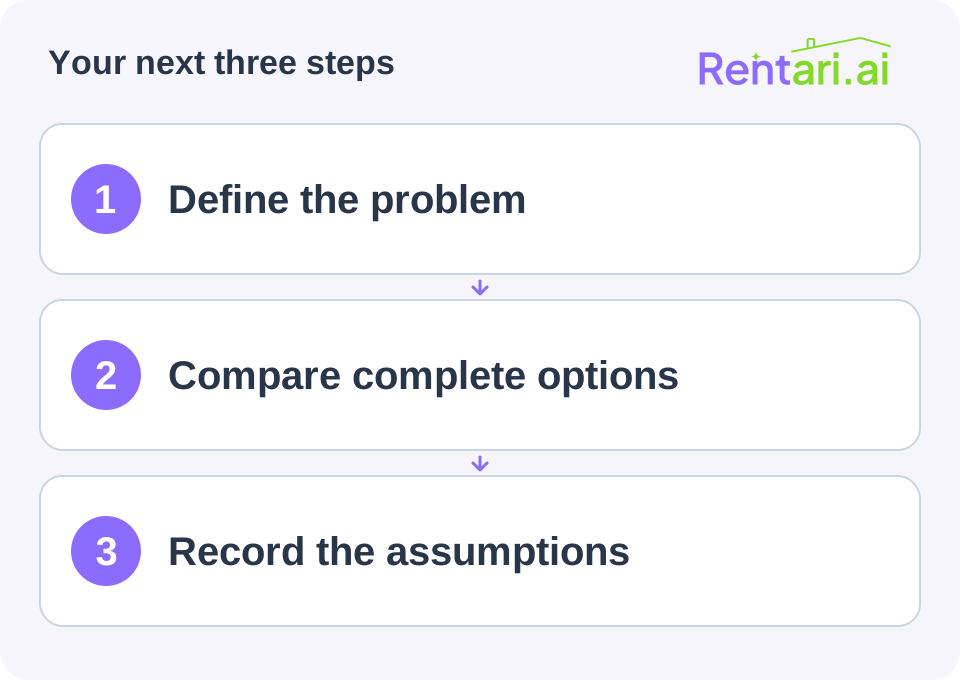
Establish the condition
Gather diagnosis, age if known, warranty, service history, recurring failures, parts availability, and safety or code concerns. Ask the contractor what is known and what remains uncertain.
Separate a necessary repair from an optional upgrade so the comparison addresses the same problem.
Compare more than the invoice
Record quoted work, labor, materials, disposal, permits where applicable, expected downtime, warranty, and likely follow-up. Do not invent a guaranteed lifespan from an online average.
For a hypothetical appliance, compare a $250 repair and a $900 replacement using actual diagnostic confidence and warranty information. The price difference alone cannot determine the better choice.
Choose and document
Include scheduling and resident impact, then record the selected option and reasons. If uncertainty is high, a second qualified assessment may be more useful than a spreadsheet full of assumptions.
Keep the invoice and asset history after completion. Ask your tax professional how to classify the expenditure rather than treating the operational choice as a tax conclusion.
Review recurring failures over time. A repair history helps you identify patterns that a single incident cannot reveal.

