The short answer
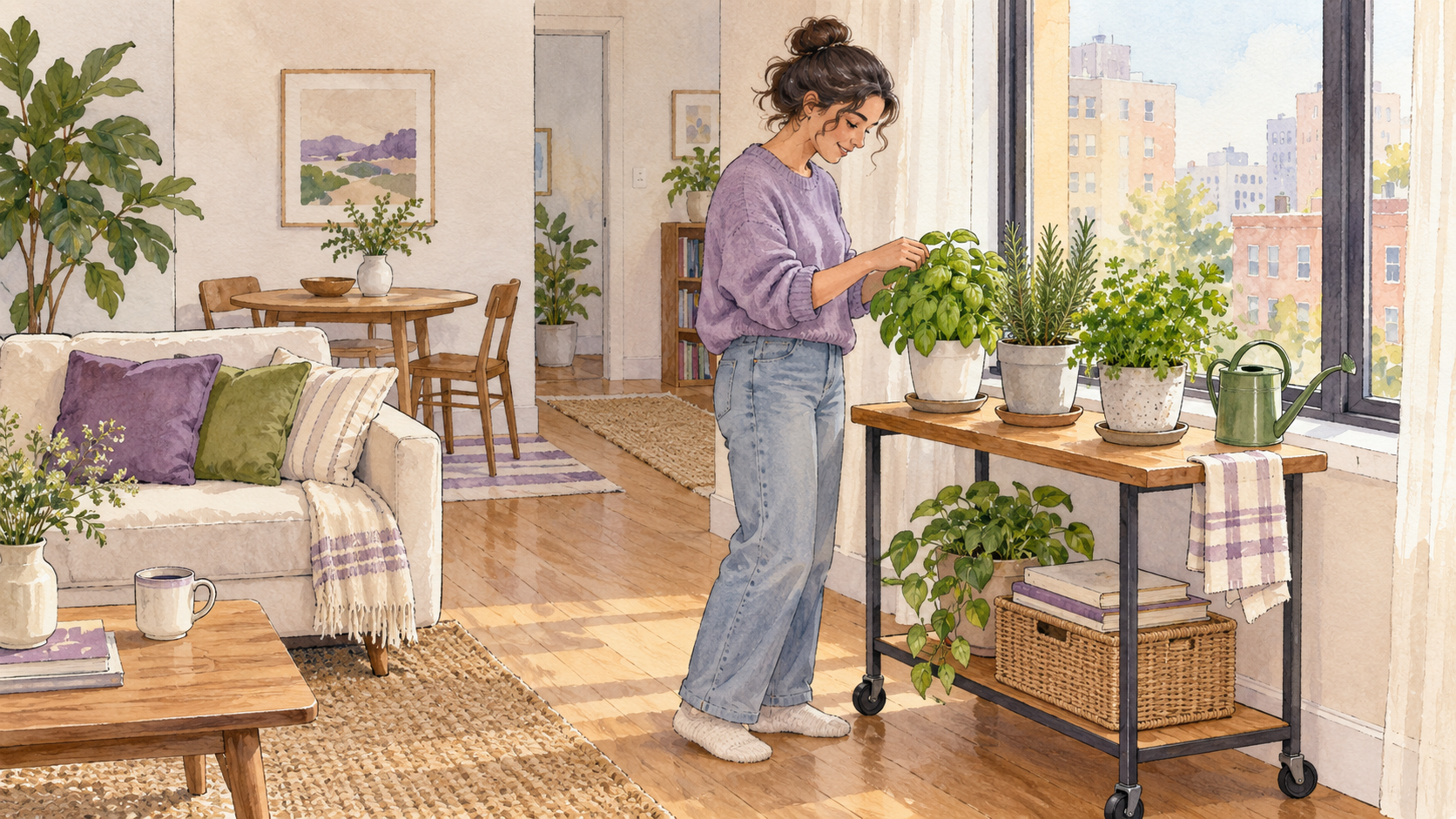
A few herbs or houseplants can fit in a rental through winter, but their light, moisture, size, and household safety needs differ. Match the plant to the room, adjust care as growth slows, and protect the home with drainage and any required written permission.
On this page
Check the light and room before you buy
Notice how much natural light reaches the proposed spot and compare it with the plant label. Culinary herbs such as basil, chives, and parsley can grow in containers, but no single window or watering schedule suits every plant. University extension guides explain the light and care needs of herbs grown indoors.
Keep plants clear of doors, operable windows, required exits, heaters, vents, outlets, and walking routes. Avoid placing foliage where it blocks a window latch or putting wet containers on a heat source. If a room has little natural light, check whether a grow light fits the plant and the outlet available; follow the fixture maker's placement and use instructions.
Start with one or two plants you will use
Choose a plant whose mature size and care instructions fit the actual space. A small herb you use in meals can be a practical first choice. Compare the plant's label with your light, room temperature, available surface, and time for care before buying several varieties.
Buy a healthy plant or seeds from a reputable garden center. Keep its botanical name and care information so you can verify watering, light, and household safety later. Common plant names can refer to different species.
Adjust care for winter light and heating
Recheck the light at the plant's actual position as days shorten. A spot that worked in summer may be too dark in winter. Keep foliage away from cold glass, opening-door drafts, and heat registers; do not block a vent or move a pot onto a radiator. Check the particular species' needs rather than treating one minimum temperature as suitable for every plant.
Maryland Extension identifies overwatering as a common winter problem. Slower growth can mean slower water use, but a warm room, pot material, and the plant itself change how quickly the mix dries. Inspect moisture and the plant's condition before watering; a reminder should prompt a check, not an automatic pour. Wilting with wet soil can indicate root trouble, so adding more water may make the problem worse.
Reduce or pause feeding when growth slows, following the species guidance and fertilizer label. Heated winter rooms can also be dry. Choose a plant that fits the room rather than creating persistent dampness around windows or walls. Check a plant coming indoors for insects before putting it beside others.
Compare foliage plants for indirect light
Low-light tolerance does not mean a plant needs no light. Use the linked Extension profiles to check the exact species and cultivar before choosing.
- Snake plant (Dracaena trifasciata, formerly Sansevieria trifasciata): upright leaves suit a narrow floor or tabletop space. It tolerates lower light, but well-drained mix and careful watering matter; avoid keeping it wet. Care profile. ASPCA lists it as toxic to cats and dogs.
- Spider plant (Chlorophytum comosum): medium, indirect light and a stable pot with room for arching leaves and plantlets. Reduce watering as winter growth slows, without leaving the pot in standing water. Care profile. Its individual ASPCA record lists it as non-toxic to cats and dogs; keep it from being chewed.
- Rubber tree (Ficus elastica): bright indirect light and protection from drafts. Water use falls during dormancy; avoid overwatering. This can become a large, heavy plant, so allow mature space and a stable base. Care profile. Avoid contact with its milky sap and confirm pet safety with a veterinarian; a different plant called American rubber plant is not the same species.
- Peace lily (Spathiphyllum species): indirect light away from direct sun, with moist but not soggy potting mix. Check the cultivar's size and keep it away from cold drafts. Care profile. It is toxic to cats and dogs; its common name does not identify a true lily.
- Chinese evergreen (Aglaonema species): diffuse or indirect light, with cultivar-specific needs. Reduce watering in winter, allow the mix to dry between waterings, and protect it from cold drafts. Care profile. ASPCA identifies Chinese evergreen as toxic to cats and dogs.
Choose brighter-light plants that need good drainage
- Aloe vera: choose a suitably bright spot and a well-drained succulent mix. Let the mix dry between waterings; winter usually calls for less water. Allow room for offsets rather than crowding the pot against glass. Care profile. ASPCA lists aloe as toxic to cats and dogs; this guide does not recommend using its leaves as food or treatment.
- String of hearts or rosary vine (Ceropegia woodii): a bright position, excellent drainage, and watering after the medium dries. Give trailing stems room without creating a trip or pulling hazard. Its winter rest calls for reduced watering and no feeding. Wisconsin Extension care profile. Verify the botanical name and pet safety before purchase: the common name rosary vine also refers to other plants.
- Other succulents: this is a broad group, not one plant with one schedule. Identify the species, then check its light, drainage, and winter growth pattern before choosing a mix or watering interval. Aloe and snake plant above illustrate different choices; being a succulent does not make a plant pet-safe. Use an exact-species Extension profile and the ASPCA database.
Consider moisture-demanding plants only if the room fits
These choices need closer attention than a plant that tolerates a dry room. Additional watering does not fix unsuitable light or dry air, and a humid bathroom still needs enough light.
- Bromeliads: check the species rather than applying one cup-watering rule to the whole family. For example, Aechmea fasciata likes bright indirect light and a well-drained medium; its leaf cup requires regular emptying and rinsing to avoid stagnant water and pests. Its winter water use falls. Urn-plant care profile. Watch its spiny leaf edges and confirm the exact species' household safety.
- Staghorn fern (Platycerium bifurcatum): filtered light and an appropriate epiphytic mix, with roots allowed to dry slightly but not completely. It can grow broad antler-like fronds; a potted specimen avoids installing a wall mount without permission. Naturally browning shield fronds are different from damage. Care profile. ASPCA lists this species as non-toxic to cats and dogs.
- Zebra plant (Aphelandra squarrosa): bright indirect light, humidity, and well-drained mix that does not dry completely. Reduce watering during its winter slowdown while still checking moisture. Care profile. ASPCA lists this species as non-toxic to cats and dogs under Saffron Spike Zebra; other plants share the zebra name.
- Maidenhair fern (Adiantum raddianum): filtered light and a humid position with roots that stay moist. It is a poor match for someone who needs a plant that can dry out between infrequent checks. Care profile. Confirm this exact fern's safety with a veterinarian; an absent database entry is not proof of safety.
- Alocasia Polly (Alocasia × amazonica 'Polly'): bright indirect light and warmth during growth. The RHS guide describes winter dormancy and reduced water needs; inspect the plant before continuing its summer routine. ASPCA lists Alocasia as toxic to cats and dogs. Do not eat it; follow handling precautions, including gloves.
Check the extra space and light for herbs and trees
- Peppermint (Mentha × piperita): keep it in its own container and provide adequate light with moist, well-drained mix. It spreads readily and is not a substitute for a low-light foliage plant. Care profile. ASPCA lists mint as toxic to cats and dogs, with problems possible after large ingestions; culinary use by people does not establish pet safety.
- Eucalyptus: identify the species before committing to an indoor tree. Eucalyptus cinerea needs full sun, drainage, and substantial growing room; winter indoors may be a poor fit for a small, dim apartment. Care and size profile. ASPCA lists eucalyptus species as toxic to cats and dogs; do not treat leaves or plant oil as a household remedy.
Choose the plant whose needs you can meet now. A smaller healthy plant that fits the light, care time, and household is a better starting point than a collection selected only for appearance.
Use a container that drains into a tray
Pick a stable container sized for the plant, with drainage holes, and place it on a leak-resistant saucer or tray. If you prefer a decorative pot without holes, keep the plant in a removable nursery pot, lift it out to water, let it drain, and empty the outer pot before returning it. Check the tray after watering so water does not sit on a windowsill, shelf, or floor.
Use clean potting mix made for containers rather than digging soil from a yard or shared grounds. A container needs enough room for the plant's roots and a safe place for extra water to go. Do not drill drainage holes in a rental fixture or borrowed container without permission.
Protect the home and follow the agreement
Set pots on a stable, movable surface that can support their filled weight. Leave room for ventilation and for people to use doors and windows normally. Keep water away from wood finishes, carpets, outlets, appliances, and other surfaces that could be damaged.
Read the lease and building rules before drilling, installing shelves, hanging planters, attaching a grow light, painting, or making any permanent change. Ask for written approval when required. A product marketed as removable may still leave marks or damage a surface.
Water and feed according to the plant
Plant needs vary with species, container, season, room temperature, and light. Check the care label or a university Extension guide instead of following a universal weekly schedule. Water as directed, allow excess to drain, and empty the tray; do not leave roots standing in water.
Fertilizer is optional for a first small garden. If you use it, choose a product intended for the plant and follow its label exactly. Composting is optional too; use a system designed for indoor use and follow its directions and building rules so scraps do not attract pests or create odors.
Watch for pests and household safety
Inspect leaves and soil periodically for insects, mold, or a persistent odor. Isolate an affected plant and ask a local Extension office or the property manager for an appropriate next step. Use pest-control products only when labeled for the plant and indoor setting, and follow every label direction.
Check the exact botanical name in the ASPCA plant database, including its individual species record. Non-toxic does not mean edible: any plant material can cause stomach upset if chewed. Keep plants, fallen leaves, fertilizers, tools, and potting mix away from children and animals. Ask a veterinarian when a species is unlisted or unclear; contact a veterinarian promptly after suspected toxic ingestion. An animal-safety classification does not establish safety for a child.
Specific ASPCA records used for these profiles: snake plant, spider plant, aloe, peace lily, Chinese evergreen, common staghorn fern, zebra plant, alocasia, mint, and eucalyptus.
Keep the setup simple and easy to maintain
Start with one tray, one or two plants, and a stable place where you can check them without moving heavy furniture. Use the plant's care information to set a reminder to inspect it, not to water automatically when the soil may still be wet.
Plants add greenery, but they are not a substitute for ventilation, moisture control, or reporting a maintenance problem. For indoor air questions, use the EPA's indoor air guidance. Report a leak, damaged sill, recurring pests, or persistent dampness through the rental's normal maintenance process.
Sources and further reading
- University of Maryland Extension: growing herbs in containers and indoors
- University of Minnesota Extension: growing herbs
- University of Maryland Extension: winter indoor plant problems
- University of Maryland Extension: indoor plant temperature and humidity
- University of Maryland Extension: fertilizer and reduced winter growth
- ASPCA: exact-species toxic and non-toxic plant records
- EPA: Care for Your Air
Keep learning
Archive years group longstanding rental topics. This Rentari guide was published on 2026-10-05.
Written and maintained by the Rentari team. Examples explain a decision; they are not customer results. Found an error or an unclear step? Send a correction with this page's address and the detail to review.
Your next step
Get started with Rentari