The short answer
There is no universal starting score or tenant-score cutoff. A missing score can mean the requested model lacks enough current data; it is not a score of zero or proof of missed payments. Review the underlying report, model, applicable rules, and consistent written criteria.
On this page
Check whether the criterion is permitted
Review restrictions applicable to the property's location and any housing-assistance program. A score range repeated online is not proof of a lawful or suitable policy. Set written criteria before applications arrive and apply them consistently, with appropriate review for required accommodations and local source-of-income protections.
Understand what a score or missing score means
A score is a model's output from information in a consumer file. The CFPB explains that scoring formulas and score ranges vary. A thin or missing file may not contain enough current information for a score; that is not the same as a score of zero, a verified missed payment, or a finding that someone will not pay rent. Check the report, bureau, product, dates, identity match, and disputed entries before drawing a conclusion. Do not infer reliability or deception from an applicant's age or from one number alone.
Six months is a FICO-specific minimum scoring criterion, not a universal clock for every credit score. FICO says a report generally needs an account open at least six months and an account reported within the last six months; it notes that requirements can vary across score versions. Other scoring products may use different data and criteria. Ask the reporting provider what score product and file status its report actually contains.
For more detail, see our guide to interpreting a credit score and our review steps for an applicant with limited credit history.
Handle a thin file through the reviewed process
Separate missing or insufficient history from verified negative information. Follow the same written criteria and permitted verification paths for comparable applications. Do not make an automatic rejection, require a co-signer, or impose a higher deposit just because no score was returned; check local rules before setting any condition. If a consumer report contributes to requiring a co-signer, higher rent, or a different or larger deposit, the FTC identifies that as an adverse action requiring notice under the Fair Credit Reporting Act. See the landlord adverse-action notice guide and co-signer and guarantor responsibilities.
If an applicant disputes a report, use the provider's documented process and keep the review separate from assumptions about the person. Share the CFPB tenant-screening report guide for renter-facing review steps. No credit-building method guarantees a particular score or timing.
Read the report package and status before deciding
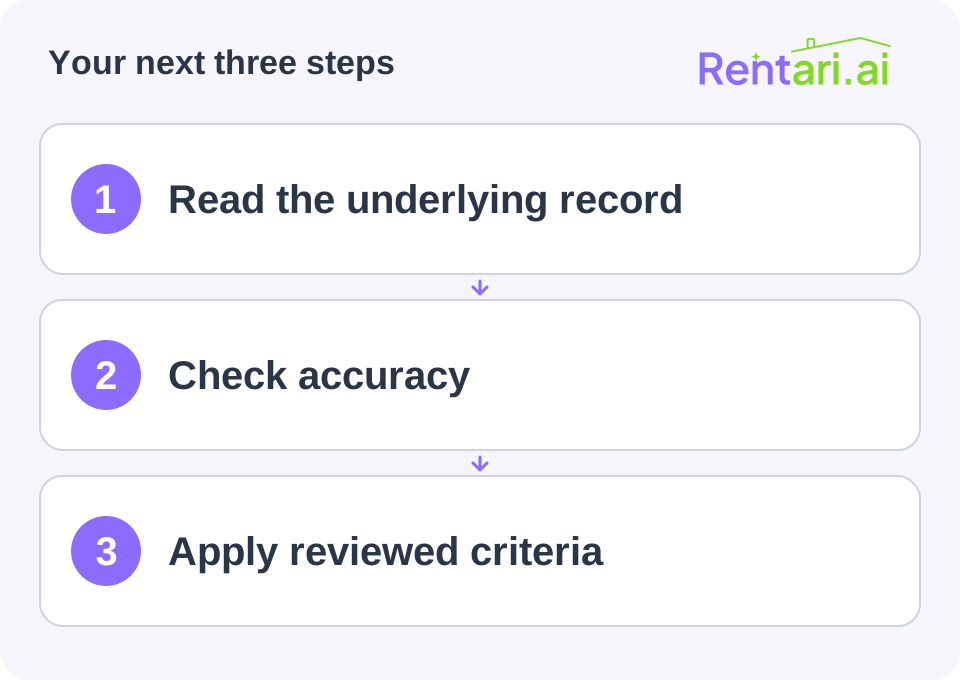
Confirm the applicant, provider, selected searches, reporting dates and returned status. Credit information does not establish that every background check was ordered or completed. Missing, pending and disputed information needs its own review; a completed report is separate from an application decision. Follow the screening-request guide and the full screening checklist. Check the actual package, price, payer and applicable fee rules before ordering.
A tradeline is an account entry; delinquency describes a reported late payment; utilization compares used credit with available credit. Read the dates, balance and dispute status behind a summary. A score summarizes a model's interpretation of a file, while the report provides the entries to examine. A collection or mismatch needs context and verification rather than an assumption about the applicant.
CFPB explains hard and soft inquiries. Confirm the inquiry used for the actual request instead of assuming every rental check works alike.
Prepare a rental application without promising a result
Ask for the property's written criteria and permitted verification options before applying. Gather relevant income and rental references through the approved secure channel. If history is limited, ask which alternative records the process accepts. A co-signer, extra deposit or advance payment is not a guaranteed solution; confirm what is permitted before agreeing to an additional obligation.
Review the actual screening report when available. Check that entries belong to you, balances and dates are current, and any court record shows its final status. An eviction filing and a completed eviction are different; a dismissed case should show the dismissal. Use the CFPB report-review checklist to identify errors and submit supporting documents through the reporting company's dispute process.
If report information led to denial or less favorable terms, review CFPB guidance on rental decisions. Ask which information mattered, request the report and dispute inaccurate entries. An explanation or correction request does not guarantee approval.
Your next-step checklist
- Confirm location-specific screening rules and use criteria set in advance.
- Identify the report, bureau, score product, dates, and whether the file is thin or unscorable.
- Resolve identity mismatches and allow the established report-dispute process.
- Consider only lawful, relevant information and permitted alternatives.
- Send the required notice when a consumer report contributes to an unfavorable decision or condition.
Sources and further reading
Common questions
Does everyone start with a credit score of zero?
No. A score is generated from information in a credit file under a particular model. No score can mean there is no file or not enough current information for that model; it is not a score of zero or proof of a missed payment.
How long does it take to get a credit score?
There is no universal timeline. For a FICO Score, myFICO lists an account open for at least six months and an account reported within the past six months among its minimum criteria. It notes that criteria can vary by score version; other models and reports may differ.
Should a landlord automatically require a co-signer or higher deposit if there is no score?
No. Apply the property's lawful written criteria and verification process consistently. A co-signer requirement or higher deposit based partly on a consumer report can be an adverse action that requires notice; state and local rules may also limit deposits and screening.
What can an applicant do if a tenant-screening report is wrong?
Ask for the reporting company's contact details, review the report, and dispute inaccurate information through the reporting company. The <a href='https://www.consumerfinance.gov/rules-policy/tenant-background-checks/review-your-rental-background-check/'>CFPB tenant-screening report guide</a> explains renter rights and review steps.
How long does a tenant credit check take?
Check the provider and actual returned status. Authorization, identity review and requested searches can affect timing. A pending request is not a completed report, and report processing is different from establishing a credit score.
How much does a tenant credit report cost?
Use the selected package and current checkout to confirm price and payer. Check applicable fee limits and disclosures before charging an applicant; a provider price does not itself authorize passing the fee on.
Does a credit check include every tenant background check?
Not necessarily. Read the selected package, searches and returned results. Credit, rental history and other records may be separate products; missing or pending information is different from a completed search.
Will a rental credit check affect the applicant's score?
Hard inquiries can affect scores; soft inquiries do not. Confirm the reporting provider's actual inquiry and authorization process before requesting a report. Do not assume all rental screening uses a soft inquiry.
Can I rent with a credit score of 500?
There is no nationwide approval threshold or guaranteed outcome. Ask for the property's lawful written criteria, identify the actual score product and discuss permitted supporting evidence. Do not assume that paying more makes an application eligible.
How should an applicant handle an eviction record?
Check identity, dates and the final case status. A filing is not the same as a completed eviction; a dismissal should be recorded accurately. Dispute errors through the reporting company and provide permitted supporting records. Accurate history and local restrictions need separate review.
Archive topic 2023 follows the source library's archive year; Rentari's original publication date is not verified. This answer was updated on 2026-10-12.
Written and maintained by the Rentari team. Examples explain a decision; they are not customer results. Found an error or an unclear step? Send a correction with this page's address and the detail to review.
Your next step
Request and review a screening report