

A short lease can omit important information, while a long one can contain irrelevant or conflicting clauses. Evaluate the form's fit rather than its length or price.
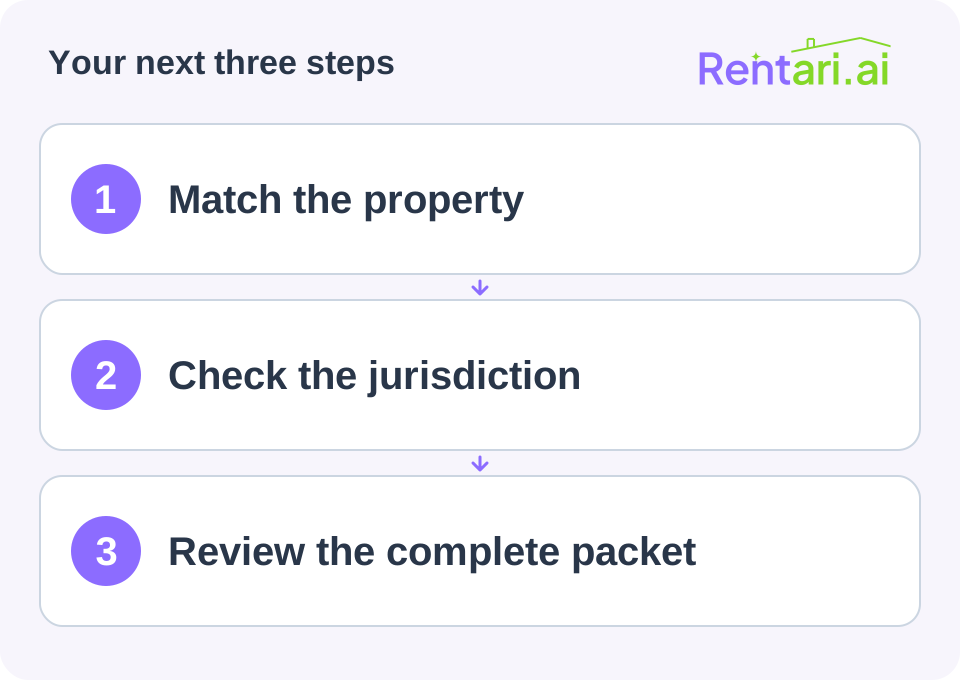
Identify the actual arrangement
Write down the jurisdiction, property type, intended term, included spaces, utilities, and whether the arrangement involves rooms, roommates, or a guarantor. Check any licensing, program, or building requirements that affect the tenancy.
A form for a whole single-family home may not describe a room rental accurately. A state label alone does not establish compliance with city requirements.
Check origin and revision
Identify the publisher, revision date, intended use, and instructions. Confirm that required disclosures and addenda are included. Ask a qualified local professional to review uncertain terms rather than combining attractive clauses from unrelated internet forms.
For covered housing, EPA explains lead-disclosure duties that arise before a lease is signed. Review whether those requirements apply to the specific property.
Read the packet as one document
Compare names, unit, dates, amounts, payment schedule, included services, and references across all attachments. Resolve contradictions before sending the packet.
Keep a clean approved master and a separate completed version for each tenancy. Record who reviewed the form and when it should be checked again. A usable form is one you can explain and administer accurately, not simply one you can download.
Sources and further reading
Source review: September 24, 2026. Check current requirements before acting.

