

A lease packet becomes confusing when attachments accumulate without an inventory. A one-page index helps everyone identify what is included, which version was sent and where a question needs review. The index supports the reviewed documents; it does not decide their legal priority.
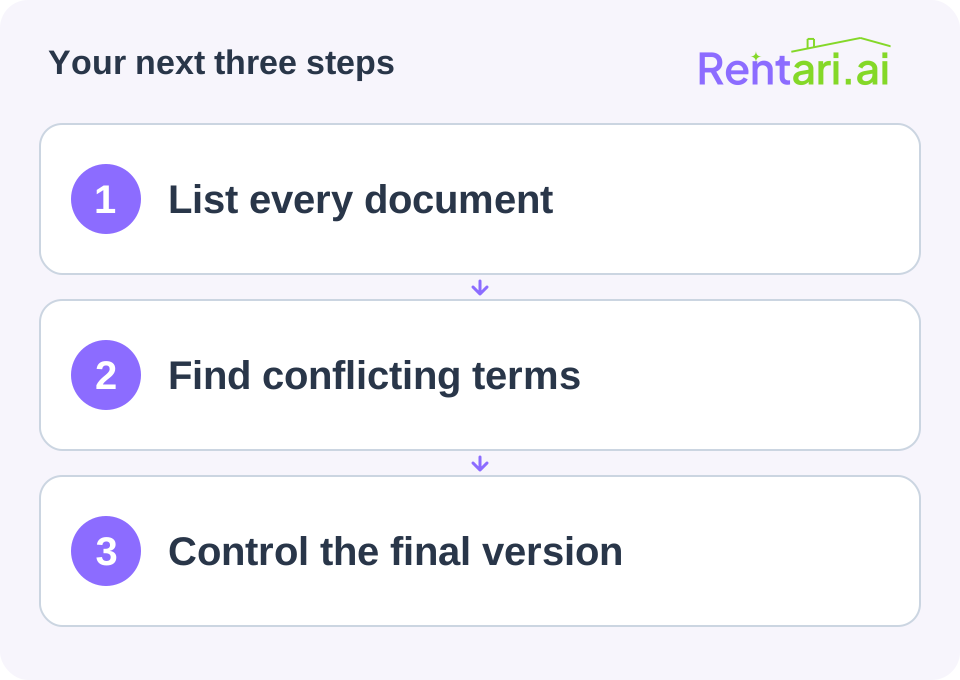
Build the inventory before assembling the packet
Give each document a short internal reference and record:
- Exact title and version date.
- Purpose and the property or tenancy it covers.
- Whether it is information-only or needs signatures under the reviewed process.
- Required parties, current status and the controlled file location.
- Any attachment or document it refers to.
Include the base lease, addenda, disclosures, condition record and separate agreements that actually belong in this tenancy's packet. Do not add a document merely because another owner uses it. Keep an informational welcome guide distinct from documents establishing or changing terms.
Work through a five-document example
Suppose a hypothetical packet contains a base lease, utility addendum, parking addendum, condition report and welcome guide. This is an inventory example, not a universal list of required documents.
Use references L-01, U-01, P-01, C-01 and W-01. The inventory points to the exact file for each reference and records its reviewed signing or delivery requirements. W-01 is labeled informational; it is not used to introduce a new charge.
During comparison, the base lease says the owner pays water, while U-01 assigns water to the resident. P-01 also refers to a parking-space diagram that is absent. Record two issues instead of guessing which document wins:
- Utility conflict: identify both document versions and the conflicting sections; assign the question to the qualified reviewer.
- Missing attachment: identify the diagram referenced by P-01; obtain the approved diagram or have the reference corrected through review.
Do not send the packet as complete while those issues remain unresolved. After correction, update the inventory and recheck every place the affected utility or parking information appears, including the offer already communicated.
Cross-check shared facts in a fixed order
Compare the full address and unit, parties' names, term dates, charges and due dates first. Then compare included spaces, utility responsibilities and references to other documents. A repeated fact should not depend on which attachment the reader opens.
Keep the issue record short: document reference, location, conflicting fact, review owner and resolution. A reviewer should be able to reopen the two exact pages without searching an email thread. Have a qualified professional resolve legal ambiguity rather than deleting clauses simply to shorten the packet.
Freeze and verify the signing version
Assign one final packet identifier and keep superseded drafts separately. Match the outgoing files against the inventory before sending. Record the recipients, signing roles and version sent.
If the packet changes during signature collection, follow the signing platform's proper correction or restart process. Never assume a signature on an earlier version accepts a new term. Record which version replaces the old one so both cannot be mistaken for the current packet.
After completion, check the returned documents and required signatures against the inventory. Provide the executed packet through the required method and retain its audit record. Close the administrative task only when the completed file matches what the inventory says was included and delivered.

