The short answer
Compare practical energy improvements with the building's condition, project cost, ventilation needs, and actual utility use. A Passive House retrofit follows a specific certification path; it is not a guaranteed savings or rent premium.
On this page
Find the cause before buying equipment
Review utility use over comparable seasons and check for leaks, damaged seals, blocked vents, and poorly maintained equipment. Separate changes in weather, occupancy, and billing rates from a change in performance. Ask the resident about the actual comfort problem.
Arrange appropriate professional assessment for heating, cooling, wiring, moisture, or ventilation issues. A low-cost cosmetic change will not resolve unsafe equipment or a building defect. Avoid promising a savings percentage without a property-specific basis.
Compare improvement options
Consider suitable lighting, weather sealing, efficient appliances, shading, and equipment servicing. Check compatibility, installation requirements, warranty, repairability, and expected life. Confirm whether an association, permit, or owner approval is required.
Identify who pays the utility bill and who controls the equipment. If a resident benefits from lower bills while the owner pays the installation cost, describe that arrangement clearly. Check current incentive eligibility with the administering organization before including a rebate in the budget.
Consider the landscape and daily workflow too
- Water-smart planting: choose regionally suitable plants for the actual soil, sun, and rainfall. Group compatible watering needs and repair irrigation leaks. Consider useful lawn areas, drainage, accessibility, local rules, and establishment care before replacing a landscape. Low-water planting still needs an appropriate maintenance plan.
- Paperless records: use a verified digital application and document workflow where appropriate. Preserve accessible alternatives, valid delivery, record retrieval, privacy, and required retention. Do not claim a paper-saving total without measuring your own activity.
- Efficient appliances: compare the model's energy and water information with installation, repair, and replacement costs. Describe the equipment accurately in the listing without promising a universal rent premium.
- Thermostat controls: verify equipment compatibility, safe installation, practical schedules, and resident control. Explain operation and help contacts. Plan account access and handover for connected devices, including what happens when a resident leaves.
Prioritize a feasible improvement, record its baseline and total cost, then check whether it delivered the intended result.
Understand the Passive House standard
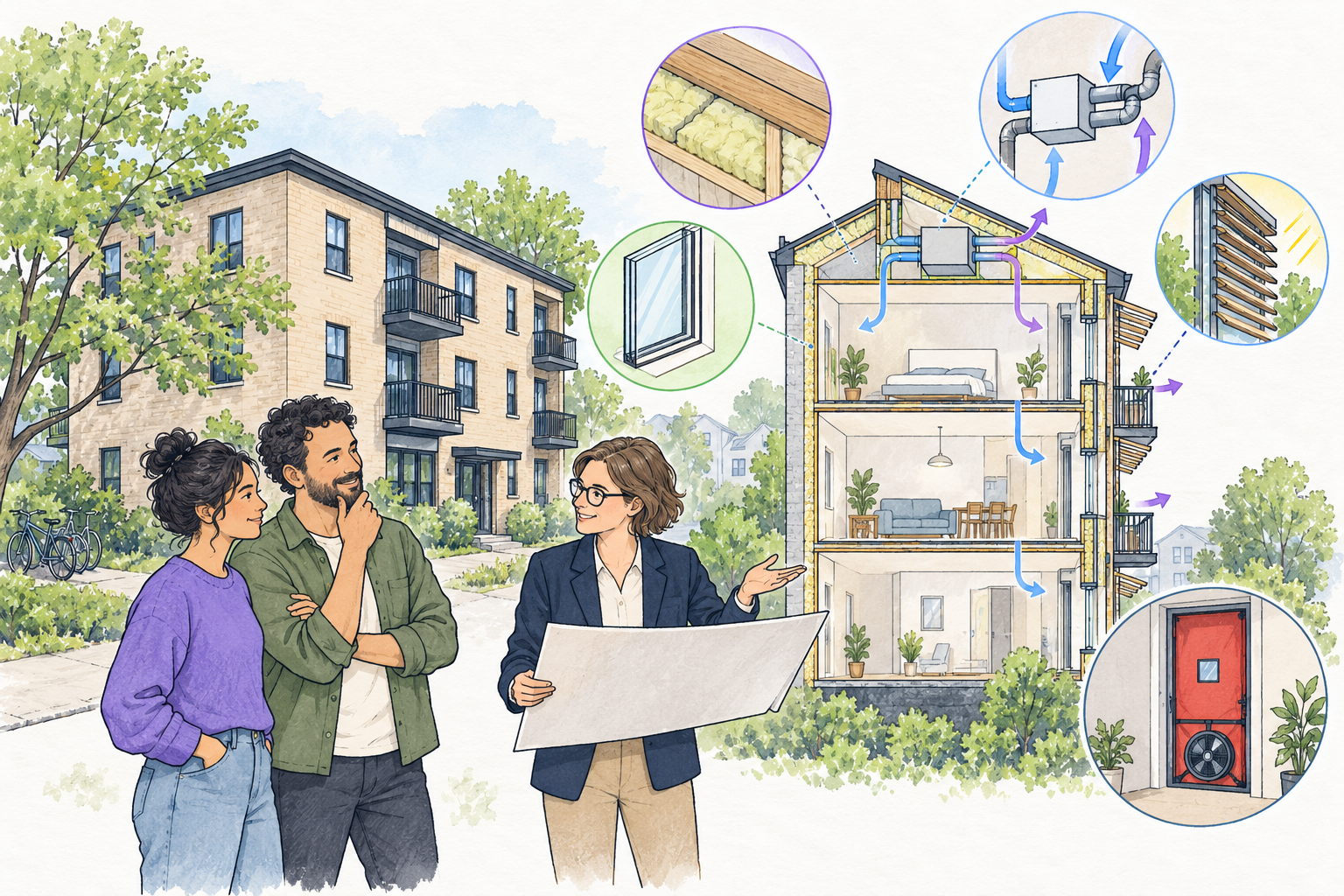
Passive House is a high-performance building standard, not a synonym for passive solar design, natural ventilation, or a home with no heating or cooling equipment. Certification programs combine measures such as a well-insulated and airtight enclosure, high-performance windows, reduced thermal bridges, controlled ventilation, project-specific energy targets, and quality checks. A certified home can still use mechanical heating, cooling, and dehumidification sized for the building and its climate.
The Passive House Institute (PHI) publishes the Passive House and EnerPHit standards, including a retrofit path for existing buildings. Phius has its own climate-specific standards, including Phius REVIVE 2024 for existing-building retrofits. These programs have distinct criteria and verification processes; they are not interchangeable labels. Ask the designer or certifier which current standard, project scope, and certification level a proposal actually follows. Do not describe a rental as certified unless the relevant program has issued certification for that property.
Plan a retrofit around this property
Start with dated energy bills, weather, occupancy, equipment condition, comfort reports, and who pays each utility. Have a qualified building professional assess the enclosure, moisture risks, ventilation, windows, heating and cooling, and electrical capacity before selecting measures. For a certification goal, bring a designer familiar with the chosen program into the planning stage; modeling and project-specific targets can change the scope.
Compare the full cost of assessment, design, permits, materials, installation, temporary relocation or disruption, future service, and replacement. Plan a moisture-safe sequence for air sealing and insulation, then define how fresh air will be supplied and measured. Do not seal openings, cover combustion-air pathways, or change ventilation equipment as a stand-alone energy-saving step. Confirm local code, resident access, and incentive rules with the authority or program administering them.
Verify the work and keep useful records
Agree in advance how the finished work will be checked. Depending on the project, the design team may use energy modeling, enclosure inspections, an airtightness test, measured ventilation airflow, and equipment start-up or commissioning. A qualified professional should set the test method and acceptance criteria for this building and certification program. A single blower-door result does not establish indoor-air quality, energy savings, or certification by itself.
Keep the scope, approved plans, product details, invoices, inspection and test results, operating instructions, and any issued certificate with the property record. Give residents plain instructions for ventilation controls, filters, and maintenance contacts, and explain what work is scheduled. Rentari can organize property, utility, expense, maintenance, and vendor records; it does not inspect, model, certify, or manage a retrofit.
Better comfort or lower energy use may result, but neither a fixed savings percentage nor a rent premium is assured. Verify any grant, rebate, or tax incentive directly with the administering program before budgeting or advertising it.
Give residents useful instructions
Explain approved controls, filter responsibilities, and how to report a fault. Do not restrict essential heating or cooling as a cost-saving measure without checking the governing requirements. Preserve accessible use and reasonable accommodation processes.
After the work, verify the installation and compare later use on a like-for-like basis. Keep the invoice, model, service instructions, and any observed comfort improvement in the property record.
Sources and further reading
Keep learning
Review a solar proposal and the resident arrangement
Start with the property and utility setup. Ask qualified providers about roof condition, shading, electrical capacity, permits, utility interconnection and the meter serving each home. Identify who owns the equipment and who pays each bill. The Department of Energy's solar guide provides planning questions; a general guide or a neighbor's installation does not establish this property's output or savings.
Compare the complete commitment. Review the purchase, loan, equipment lease or power-purchase arrangement, including recurring charges, rate changes, monitoring, repairs, insurance, roof work and eventual transfer or removal. Ask the utility about the actual tariff and credits. Keep a lower-output or higher-cost case in the budget, and verify current program eligibility separately before counting an incentive.
Explain the resident impact before work begins. Record installation access, disruption, safety contacts, operation and how billing questions will be handled. Separate the owner's project costs from the resident's agreed rent and utility obligations. Review the lease and applicable requirements before proposing any new charge or term; neither installation nor predicted bill savings authorizes an automatic increase. Check actual bills and unresolved issues after the system is operating.
Common questions
What makes a building a Passive House?
A Passive House certification evaluates a whole-building design and its verified performance under a specific program. Typical strategies include strong insulation, high-performance windows, fewer thermal bridges, airtight construction, controlled ventilation, and project-specific energy targets. Check the chosen program's current criteria and certificate for the property.
Does a Passive House have no heating or cooling system?
No. The standard aims to reduce heating and cooling demand. A building may still use mechanical heating, cooling, and dehumidification; the design depends on the building, climate, and program requirements.
Can an existing rental be retrofitted to a Passive House standard?
Potentially. PHI offers EnerPHit for existing buildings, and Phius publishes its separate REVIVE 2024 retrofit standard. Building condition, climate, scope, cost, and current certification criteria determine what is feasible; consult a qualified designer or certifier before making a claim.
Does a Passive House guarantee lower utility bills or higher rent?
No universal savings or rent increase is guaranteed. Compare the property's bills and costs before and after using similar periods, and verify local rental evidence. Check incentive terms with the program administrator before including them in a budget.
Does an airtight home still need ventilation?
Yes. Energy-efficient homes need planned whole-house ventilation to bring in fresh air and dilute indoor pollutants. Air sealing without an appropriate ventilation design and operation plan can allow pollutants to build up. Have a qualified professional assess airflow and equipment.
Archive years group longstanding rental topics. This Rentari guide was published on 2026-10-03.
Written and maintained by the Rentari team. Examples explain a decision; they are not customer results. Found an error or an unclear step? Send a correction with this page's address and the detail to review.
Your next step
Follow a maintenance request