The short answer
Use renter-controlled energy steps, plan for extreme heat, and report cooling problems without assuming that a fan or unapproved device can replace required cooling.
On this page
Start with the bill and the controls you actually have
Check whose name is on the utility account, how the unit is metered, what the rate includes, and whether any charge is allocated or shared. Compare energy use over similar billing periods and note weather, occupancy, and rate changes; a higher bill is not always higher energy use. If a meter or charge is unclear, ask the utility or housing provider rather than opening a panel or inspecting building wiring.
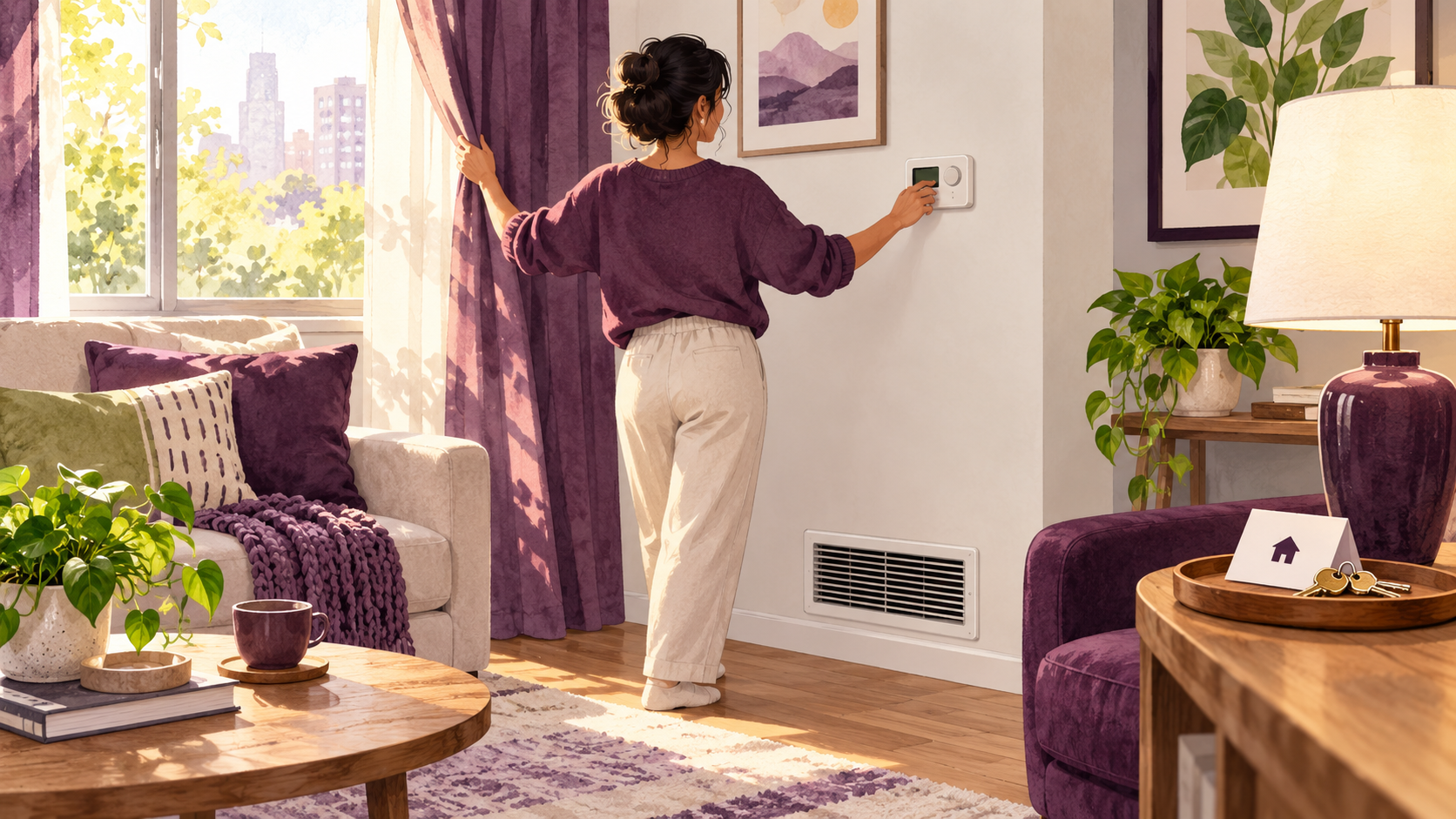
Use the thermostat, curtains, shades, and existing equipment as intended. Keep supply and return vents clear, close curtains when direct sun is unwanted, and follow the instructions for a thermostat already provided. Do not compromise safe indoor temperatures, ventilation, or required heating to chase a bill reduction.
Choose small changes you control
If you are responsible for a replaceable lamp, check the fixture label and bulb shape, wattage, dimmer, and manufacturer's instructions before choosing a compatible LED. Keep window coverings and furniture clear of heaters, vents, exits, and equipment. Use existing appliances according to their manuals, and switch off or unplug small electronics only when doing so is practical and safe.
Do not assume a product will lower a particular bill amount. Electricity price, meter setup, weather, equipment, and how long something is used affect the result. Ask your utility about current account-specific usage tools or assistance programs if a bill is hard to manage.
Use passive cooling only when conditions support it
Use existing blinds or curtains to reduce direct sun, especially on bright windows. If you can safely open windows, do so only when outside air is cooler than the indoor air and outdoor air quality, weather, security, and window rules allow it. Close them again when outdoor conditions become hotter or unsafe. Ventilation does not cool every climate or unit equally, and an open window is not a substitute for working cooling during dangerous heat.
A fan moves air across a person; it does not lower the room temperature. Follow the fan's instructions and keep it stable, dry, and clear of curtains and walkways. Current CDC guidance says to use a fan indoors only when the room is below 90°F (32°C); above that, a fan can increase body temperature. Do not place ice, water, or wet fabric where it could contact a fan, outlet, or other electrical equipment.
Make a plan before a hot room becomes an emergency
Check local heat alerts and the CDC HeatRisk forecast before a heat wave. If the home is becoming dangerously hot, arrange early to spend time in an air-conditioned place. Call 2-1-1 or contact the local health department or emergency-management office to ask about cooling centers. Drink water as appropriate for your health, use a cool shower or damp cloth for relief, and check on people or pets who may need help. Do not rely on a fan when the indoor temperature has reached 90°F.
Heat-related illness can include heavy sweating, weakness, headache, dizziness, nausea, or fainting. Confusion, loss of consciousness, or a suspected heat stroke is an emergency: call 911 and follow emergency-dispatch instructions. A guide to energy use is not a medical plan; ask a clinician about personal risks, medicines, or medical equipment affected by heat.
Ask before sealing, installing, or replacing anything
Caulk, adhesive weatherstripping, window film, awnings, window air conditioners, smart thermostats, and fixed appliances can alter a surface, window, wiring, equipment, or building exterior. Check the lease and get the required permission before installing them. Describe the exact item, location, attachment, removal plan, and who will pay or maintain it; an energy tip is not permission to modify the rental.
If you notice a persistent draft, a loose window, broken thermostat, damaged appliance seal, unusual moisture, or HVAC problem, send a clear repair request through the established channel. Do not dismantle equipment or treat routine filter guidance as authorization to service a system. The landlord's or provider's repair duties remain governed by the applicable agreement and law.
Keep electrical changes within the product instructions
Use plugs, bulbs, smart devices, and power strips only as their manufacturers direct and within the product's marked rating. Do not overload or daisy-chain power strips or extension cords, use a damaged cord, or run a cord where it creates a trip hazard. Stop using an outlet or device that sparks, smells hot, or has visible damage, and promptly report the condition. For extension-cord and power-strip guidance, follow the Consumer Product Safety Commission safety poster.
Do not install a thermostat, change an outlet, add wiring, or fit a cooling unit into a window unless the property's process allows it and the exact equipment can be installed safely. Ask a qualified professional when electrical, structural, or HVAC work is involved.
Separate renter actions from building upgrades
An owner or authorized professional can evaluate air sealing, equipment service, controls, insulation, and appliance replacement for the whole property. During hot weather, an owner should also have a clear process for reports of failed cooling equipment and arrange an appropriate assessment or repair using the actual local requirements. Do not assume that a portable fan resolves a cooling-system failure or that every home has the same legal duty to provide air conditioning.
Compare the actual model, compatibility, installation, maintenance, utility-bill responsibility, available incentives, and measured baseline. Confirm the work protects ventilation, moisture management, fire safety, and resident comfort. A building upgrade does not guarantee a smaller bill for every household. For owner-side budgeting and equipment decisions, see the rental improvement guide. Keep renter requests and owner responses with the property record.
Sources and further reading
Keep learning
Archive years group longstanding rental topics. This Rentari guide was published on 2026-10-04.
Written and maintained by the Rentari team. Examples explain a decision; they are not customer results. Found an error or an unclear step? Send a correction with this page's address and the detail to review.
Your next step
Get started with Rentari