

A roommate leaving does not automatically establish how the remaining agreement changes. Start with the current documents and the proposed arrangement.
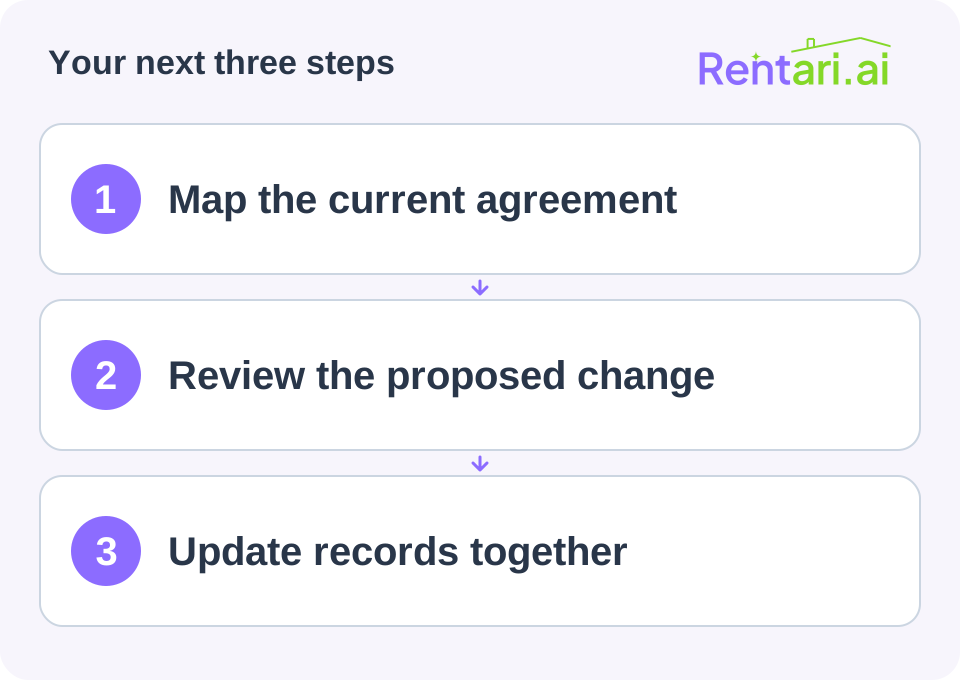
Map the existing tenancy
Identify who signed which agreement, the covered unit or rooms, term dates, payment obligations, deposit records, and any guaranty. Separate the landlord's records from private cost-sharing arrangements between roommates.
Do not assume that a roommate's informal transfer releases anyone from an existing obligation.
Review the change before agreeing
Record the proposed departure date, replacement occupant, and requested changes. Apply the lawful application and accommodation process where applicable. Obtain qualified local review of required consent, amendments, releases, and deposit handling.
A new name in software is an administrative update, not proof that the legal documents changed correctly.
Coordinate the final handoff
After the appropriate agreement is completed, update occupancy, contact access, payment records, keys, and emergency information with the correct effective dates. Preserve the earlier record rather than overwriting it.
Explain who receives the executed documents and how shared balances are being recorded. Avoid deciding a private roommate dispute through an undocumented ledger edit.
Use a small change checklist for the next request. It should name the responsible reviewer and make clear which steps must be confirmed before access or account records change.

