
Post 38 of 104
The short answer
Before referring a rental balance to anyone else, assemble an accurate file. A collection referral should not be an attempt to outsource uncertainty about what is owed.
On this page
Reconstruct the balance
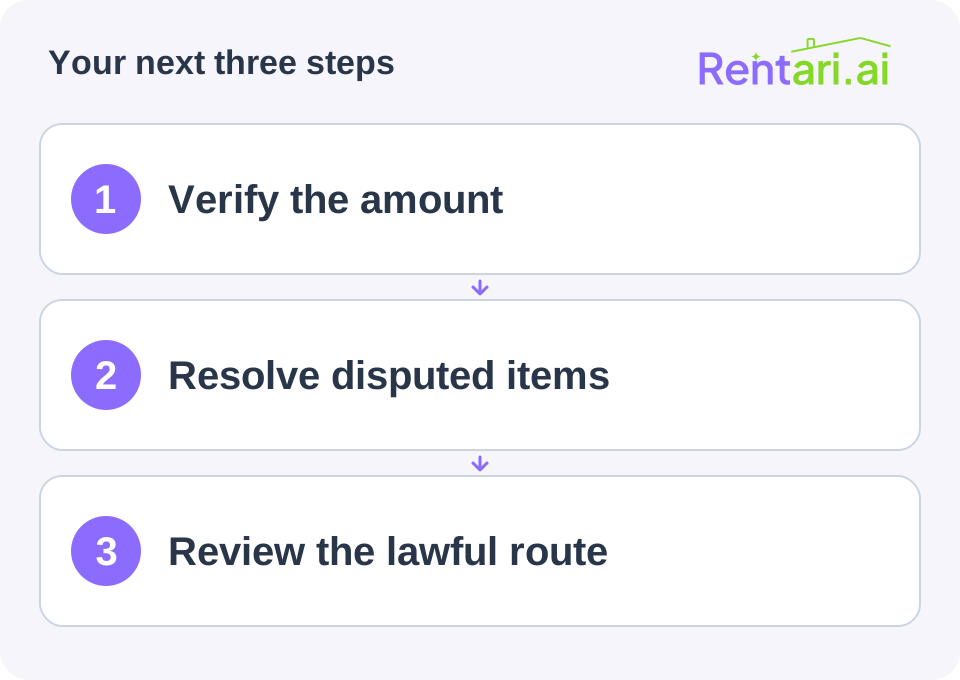
Gather the agreement and amendments, dated ledger, payment evidence, credits, relevant communications, and supporting records for disputed charges. Separate rent, fees, damages, and other items rather than presenting one unexplained total.
Check for duplicate charges, unallocated receipts, refunds, and amounts still under review.
Identify the unresolved questions
Record disputes in the resident's own factual terms and what evidence has been reviewed. Do not describe an allegation as an established fact. Keep sensitive documents secure and share only necessary information with an authorized professional.
Avoid public lists, social-media accusations, or informal exchanges of tenant screening information.
After eviction, separate possession from the money decision
Read the signed order and any later orders before treating a ledger balance as an enforceable judgment. Confirm the named parties, the amount actually awarded, credits already applied, and whether the court decided possession, money, or both. An order returning possession does not by itself establish that every charge in your file is collectible.
Check outstanding motions, appeals, stays, service issues, and any separate claim needed with a qualified local adviser. A bankruptcy notice also requires prompt review of the applicable stay or discharge; an earlier eviction does not make it irrelevant. See the steps after an eviction decision for the possession handoff.
Review the lawful route for this debt
Identify the debt's actual purpose and who is collecting. A resident's personal household rental debt does not become a business-purpose debt because the owner operates a business. Federal debt-collection rules generally cover qualifying third-party collectors rather than an original creditor collecting in its own name; their precise definitions and state laws still matter. This distinction does not permit harassment, an inaccurate balance, or ignoring other applicable rules.
- Voluntary resolution: provide an accurate itemization and consider a lawful written settlement or payment plan. Define the accepted amount, dates, disputed items, and what resolves the obligation. Do not present an unavailable or unfiled legal remedy as an inevitable consequence.
- A new claim: verify the proper court, parties, claim limits, filing and service requirements, costs, and limitation period. A covered debt collector may not sue or threaten suit on a time-barred debt. Review local law and the collector's role before choosing a route.
- An existing money judgment: check available enforcement procedures, exemptions, and required orders or authorized officers. A wage-garnishment cap is a ceiling where the remedy is available, not a national right to garnish. Texas's official consumer guidance says wages cannot be garnished for consumer debts. California's court guide describes its court procedures and protected assets; those instructions are California-specific.
- A professional handoff: confirm scope, lawful authority, necessary records, fees, disputes, and responsibility for reporting and corrections. A referral does not make an inaccurate file accurate.
Do not seize property yourself, assume a lien blocks every asset sale, or assume a private rental judgment gives access to federal tax-refund offsets. The Treasury Offset Program described by the U.S. Treasury collects debts owed to government agencies.
Agree a clear repayment or settlement plan
Start with the itemized amount and evidence, not assumptions about the former tenant's income or assets. Ask whether they dispute an item and whether a realistic voluntary payment arrangement is possible. Keep communication factual, private and appropriate to the collector's role; check any representation, contact restrictions and applicable notices before contacting them.
A written arrangement should identify the parties, the reviewed balance, any agreed reduction, amounts and payment dates, how receipts are credited, and what completes the settlement. Have disputed terms, added charges and the effect on any existing judgment reviewed locally. A new promise does not mean money has arrived. Do not threaten a lawsuit or seizure that is unavailable or not actually intended.
Understand the court process before starting a new claim
Confirm that a separate claim is allowed, the deadline has not expired, the correct parties and court, and whether the agreement requires another dispute process. Court limits and representation rules vary, including for business entities. California's official guides illustrate the following stages; use your own court's current rules and forms rather than importing its limits or deadlines.
Small claims stages
- Review eligibility, the supported amount and any required demand. Assemble the lease, ledger, receipts, communications, prior orders and deposit accounting.
- Complete and file the required claim forms and address filing fees or applicable fee-waiver rules.
- Arrange lawful service and keep the required proof. Sending an ordinary rent reminder is not necessarily service of a court claim.
- Prepare for the hearing, follow evidence and attendance instructions, and address any response or counterclaim. A settlement can change which steps remain necessary.
- Read the signed decision and any review or stay rules. A favorable decision does not itself deposit money into your account.
Civil case stages
- Review the legal basis, evidence, costs and representation requirements with qualified help. A larger balance alone does not establish a valid claim.
- Prepare and file the complaint and required papers, then arrange proper service.
- Track the defendant's response deadline and any permitted response, counterclaim or court-approved default process. Silence is not permission to take property yourself.
- Follow discovery, scheduling, motion and hearing requirements while considering lawful settlement.
- Prepare for and attend trial if the case has not resolved. Review the resulting judgment and any later orders before choosing enforcement.
The California small claims overview and civil plaintiff overview describe these distinct processes. Rentari's records can support your preparation; Rentari does not file the claim or represent you in court.
Review liens, levies and wages as separate remedies
First establish an enforceable money judgment and check stays, exemptions, deadlines and the property's actual jurisdiction. Investigate assets through lawful channels rather than public accusations or informal access to private records. Compare likely recovery with fees and time; protected property and an unavailable remedy can make an apparently valuable asset unsuitable.
Property lien: California describes obtaining an Abstract of Judgment and recording it with the county for real estate. A properly recorded lien may lead to payment from a sale or refinance; it is not a blanket ban on selling every possession and does not guarantee proceeds. Confirm the applicable property, recording and release rules locally.
Bank levy or wage process: California describes a court-issued Writ of Execution and an authorized sheriff's collection process. Other jurisdictions have their own application, service, officer and exemption rules. Follow the required order and notices rather than asking a bank or employer to send money based only on your ledger.
For ordinary garnishments, the federal CCPA ceiling generally uses the lesser of 25% of disposable earnings or the amount above 30 times the federal minimum hourly wage for a weekly pay period. Disposable earnings means earnings after legally required deductions. More protective state rules can lower the permitted amount, and different debt types have different rules. The ceiling does not authorize this remedy in every state: Texas's consumer guidance states that consumer debt collectors cannot garnish wages.
Track actual remittances and the changing balance. The Treasury Offset Program is a government debt process; a private rental judgment does not automatically let a landlord intercept a federal tax refund.
Check an agency handoff and its costs
If considering a collection professional, verify the authority and qualifications required for the location, the specific service offered, and how complaints, disputes and corrections are handled. Review the agreement before sharing sensitive records. A referral is not a way around a stay, an expired claim deadline or a disputed amount.
- File: provide the reviewed itemization, agreement, payments, credits, prior orders and unresolved disputes, sharing only information needed for the authorized work.
- Fees: compare any upfront amount, percentage of money actually recovered, litigation charges and expenses, cancellation terms and how net proceeds are remitted. Do not assume every agency uses one fee range or that its fee can be added to the resident's debt.
- Responsibilities: identify who may contact the debtor, approve a settlement, handle validation and disputes, or furnish and correct credit information.
- Updates: reconcile provider statements against actual receipts and notify the professional of later payments or credits to prevent duplicate recovery.
A compliant agency may still recover nothing. Rentari supports organizing records and tracking received payments; this page does not offer an in-house collection agency or promise a recovery outcome.
Keep deposit and belongings duties separate
Review permitted deposit deductions, itemization, delivery, and return deadlines under the applicable lease and law. Credit a lawful deduction once and reconcile receipts, pending payments, refunds, and adjustments before calculating a remaining balance. The unpaid-rent deposit guide and deductions and wear-and-tear guide explain the separate review.
Left-behind belongings are not automatically yours to sell as repayment. Establish ownership and the applicable notice, inventory, storage, retrieval, disposal, and proceeds rules before acting. Utah's official court guide describes a specific process with conditions and protections; its deadlines and sale rules are not a nationwide procedure. Do not bypass a pending dispute or court order because rent remains unpaid.
Reconcile each recovery and the final record
Record actual receipts, lawful deposit credits, insurance recoveries, settlement adjustments, and professional remittance statements by date. Distinguish gross collections, authorized fees withheld, net money remitted, and the remaining legally supportable balance. A collector's fee does not automatically become a new tenant charge. Avoid recovering the same loss twice; see damage beyond the deposit for related reconciliation.
Record outside money in Rentari only after it has actually been received and checked for an existing record. The outside and partial payment walkthrough shows allocation, method, date, and receipt choices. Payment notes may be visible to the tenant, so keep them factual and suitable for that audience. An offline record does not collect funds or enforce a judgment.
Close the legal record separately: check required satisfaction, release, notice, or reporting corrections for the relevant jurisdiction and process, and retain proof. A prepared refund differs from an actual return; the deposit-return walkthrough distinguishes review, confirmation, and completed outside payment. Rentari provides software and written guidance here; this guide does not promise court filing, legal representation, or collection-agency services.
Review options with qualified help
Discuss the lawful process, costs, reporting obligations, dispute handling, and realistic recovery expectations with an appropriate local professional or compliant provider. Rules may differ according to who is collecting and what action is proposed.
The CFPB's rental-debt resources explain protections relevant to collection activity. Do not assume a collection agency removes your responsibility for providing accurate records.
The useful next step is a reviewed, itemized file. Recovery is not guaranteed, and an unresolved balance does not justify bypassing legal procedures.
If a renter receives a collection notice
Read the CFPB contact guide and confirm the collector's identity before providing sensitive financial information. Validation information generally comes with the first communication or within five days and identifies the creditor, balance and dispute process. Compare it with your lease, receipts, credits and any deposit accounting; save the notice and communications.
The FTC explains that a written dispute within 30 days of receiving validation information requires the covered collector to pause collection until it sends written verification. Identify the disputed amount and retain proof of sending. A pause is not a decision that the obligation disappeared. If court papers arrive, respond by their separate deadline and seek qualified help rather than assuming the dispute pauses the case.
Review reported information and corrections separately
A referral is not proof that a credit entry exists or that reporting is accurate. FTC guidance requires covered collectors to take specified contact steps before reporting; an owner ledger is not a bureau record. Keep reporting responsibilities separate from possession, an agency engagement and the actual payment balance.
If a credit report contains an error, the CFPB recommends disputing with both the reporting company and the company that supplied the information. Explain the exact error, provide supporting copies and retain the originals and response records. A collector validation dispute and a credit-report dispute are different processes. Owners should provide accurate later payment/credit updates and coordinate required corrections through the authorized professional; Rentari does not furnish debt to bureaus or promise deletion or a score result through this guide.
Confirm the agency dispute and reporting handoff
Confirm who receives disputes, obtains supporting records and updates the account. CFPB validation guidance also covers a written request for original-creditor information within the 30-day validation period. A qualifying request can require the covered collector to pause collection pending the required response. An owner's reminder is not automatically the collector's validation notice.
CFPB explains the contact steps required before reporting collection debt. Speaking with the consumer is one route; mailed or electronic communication requires a reasonable wait for undeliverability information, generally 14 days. Other reporting obligations still apply. Ask what the provider actually reports, to whom, and who updates disputes, payments and corrections. Referral does not establish immediate reporting to every bureau. Rentari's software records do not refer a debt to an agency or furnish it to credit bureaus.
Build a deadline file for the particular claim
A rent-ledger date is not a calculated court deadline. Give the local adviser the agreement and amendments, each unpaid period and due date, alleged breach, payment/credit history, written acknowledgments or settlement terms, existing filings/orders and any bankruptcy information. Identify the claim, governing law and responsible reviewer; record the official source, reviewed accrual date, any adjustment and resulting filing deadline.
Accrual starts a limitation period; tolling can pause it; revival or a new enforceable promise raises a different question. Do not assume a partial payment, move-out, eviction order, grace period or agency referral resets every installment. The FTC's old-debt guidance describes state-dependent payment and acknowledgment effects. Have uncertain dates reviewed before seeking a new promise or pursuing action.
Use state examples without merging different clocks
California Courts lists general breach periods of four years for a written contract and two years for an oral contract, measured from breach and subject to applicable exceptions. The 2026 Florida statute separately lists five years for written-instrument actions and four for nonwritten-contract actions. These examples explain why agreement and claim classification matter; they do not settle your filing date or apply nationally.
A deadline for a new suit differs from an existing judgment's enforcement/renewal rules, a deposit-return deadline and a credit-reporting period. Check each separately. Under Regulation F, a covered collector cannot sue or threaten suit on time-barred debt. Other collection restrictions can also apply; expiration is not blanket permission to pressure a resident or outsource prohibited conduct.
Common questions
Does winning possession mean the court awarded every unpaid charge?
No. Read the signed order, any money award, and later changes. A disputed ledger charge or separate claim should not be represented as an existing judgment.
Does the federal garnishment limit mean I can always take part of a former tenant's wages?
No. A federal cap limits certain garnishments where permitted. The available remedy, exemptions, court process, and more protective state law require separate review.
Can I mark a collection complete when a payment is promised or recorded?
A promise, an actual receipt, a provider's processing status, and legal satisfaction are different events. Reconcile received funds and adjustments, then complete required legal closing steps with proof.
Does sending rent to collections require the same eviction sequence everywhere?
No universal sequence fits every referral. Review the debt, collector's role, local requirements and any stay or court order separately. An agency's intake requirement does not establish a legal rule for every tenancy.
Does disputing a collector's notice erase the rent balance?
No. A timely written dispute can require a covered collector to pause collection until written verification is sent. The underlying facts, lawful amount and any court deadline still need separate review.
Does disputing with the collector fix a credit-report error automatically?
No. Review the actual report and dispute inaccurate information with the reporting company and furnisher through their processes. Keep supporting copies and the results; no automatic deletion or score outcome is guaranteed.
Does an agency referral automatically put unpaid rent on every credit report?
No. Confirm the actual reporting service and applicable contact, accuracy and dispute requirements. Referral, reporting and money recovered are separate events; neither all-bureau coverage nor a credit-score outcome is guaranteed.
Does moving out or receiving a partial payment restart the unpaid-rent clock?
Do not assume so. Have the claim, individual periods, governing law, payment and acknowledgment history reviewed. Accrual, tolling, revival and judgment enforcement are distinct questions.
Does a seven-year credit-reporting period give me seven years to sue?
No. Reporting, filing a new claim and enforcing an existing judgment have different rules. Establish the applicable deadline from the actual claim and current law rather than using a credit-reporting period.
Sources and further reading
- CFPB: debt-collection coverage and conduct
- CFPB Regulation F: definitions
- CFPB Regulation F: time-barred debt
- U.S. Department of Labor: wage-garnishment limits
- Texas Attorney General: consumer debt-collection rights
- California Courts: after an eviction trial
- California Courts: collecting a civil judgment
- Utah Courts: a tenant's personal property
- U.S. Bankruptcy Court: the automatic stay
- U.S. Treasury: how the Treasury Offset Program works
- CFPB: responding to a debt collector
- FTC: debt-collection notices, disputes and reporting
- CFPB: correcting a credit-report error
- CFPB: collector validation information and written disputes
- CFPB: contact required before reporting collection debt
Source review: October 12, 2026. Check current requirements before acting.
Continue with a related task
Archive years group longstanding rental topics. This Rentari guide was published on 2026-09-24.
Written and maintained by the Rentari team. Examples explain a decision; they are not customer results. Found an error or an unclear step? Send a correction with this page's address and the detail to review.
Your next step
Review received payments